

What Is Soft Fall Synthetic Grass and How Does It Work
Soft fall synthetic grass is a purpose-engineered safety surface system designed specifically for environments where children play around fixed equipment. It is not a decorative lawn product. Where standard synthetic turf is selected for its appearance and low maintenance characteristics, a soft fall system is specified and built to perform a critical safety function — absorbing the kinetic energy of a child falling from play equipment and reducing the severity of impact injuries.
The system works through two integrated components. The surface layer is a synthetic grass product selected for its durability, drainage performance, and compatibility with the underlying system. Beneath it sits a shock-absorbing underlay — an engineered foam or rubber base layer specified to a precise depth and density based on the height of the play equipment above it. Together, these components form a complete impact-attenuation system that performs consistently across the entire surface area, regardless of foot traffic, weather conditions, or seasonal change.
The result is a safe, stable, and fully integrated play surface built to protect children from the ground up.

Durability and Service Life of Soft Fall Synthetic Grass
A correctly specified and installed soft fall synthetic grass system is built to perform across an extended service life — making it one of the most cost-effective playground surfacing investments available to Newcastle schools, childcare centres, councils, and residential property owners. Where loose fill materials degrade continuously and require ongoing replenishment, a soft fall synthetic grass system maintains its structural integrity and impact-attenuation performance consistently across years of heavy use.
The longevity of a soft fall system is determined by three primary factors: the quality of the synthetic grass surface layer selected, the density and composition of the shock-absorbing underlay, and the standard of sub-base preparation carried out before installation. Systems built on a correctly prepared base, with a commercial-grade surface product and an appropriate underlay specification, routinely deliver a decade or more of compliant performance in high-use institutional environments.
Routine light maintenance — periodic brushing and debris removal — supports surface presentation and drainage performance without affecting the system’s compliance characteristics. The result is a durable, low-management surface that continues protecting children in Newcastle play environments season after season.
The Shock-Absorbing Underlay System Explained
The shock-absorbing underlay is the component that separates a genuine soft fall synthetic grass system from a standard synthetic lawn installation. It is the engineered layer responsible for meeting critical fall height requirements — and its specification is determined by the height of the play equipment present in each environment, not by a one-size-fits-all product selection.
Underlays used in compliant soft fall systems are typically manufactured from high-density foam, rubber crumb, or a composite foam and rubber construction, each offering specific impact-attenuation characteristics suited to different equipment heights and use intensities. The depth and density of the underlay are calculated to achieve the required Head Injury Criterion (HIC) and Gmax values stipulated under AS 4422 for the critical fall height of the equipment above it.
Installation of the underlay requires precise sub-base preparation, accurate depth consistency across the play zone, and correct joining and perimeter fixing to prevent movement under load. Every element of the underlay installation directly affects the surface system’s ongoing compliance performance and the safety outcomes it delivers for children in Newcastle play environments.
Soft Fall Synthetic Grass vs Standard Synthetic Lawn
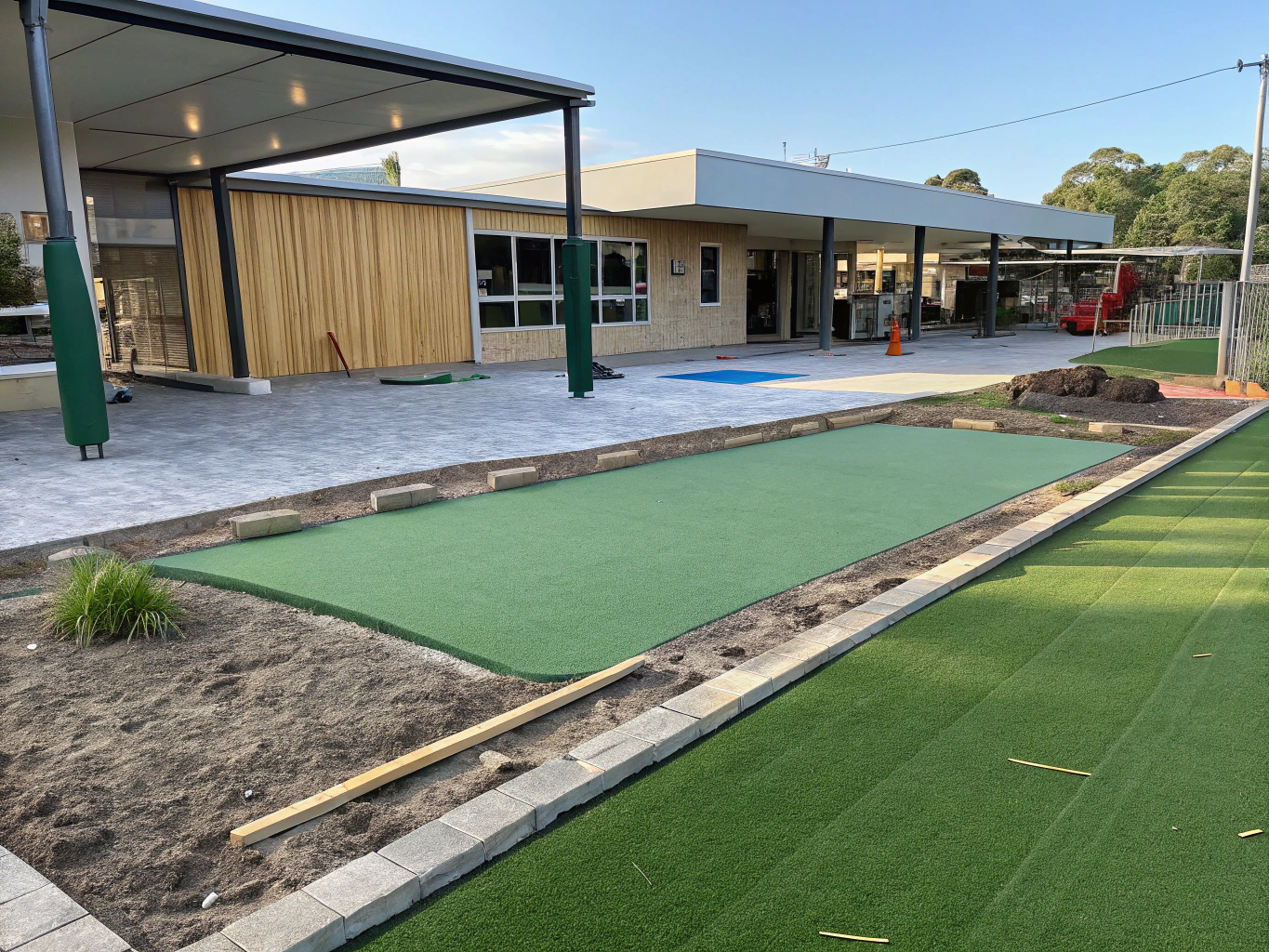
Soft fall synthetic grass and standard decorative synthetic lawn are not interchangeable products — and the distinction matters enormously in any environment where children play around fixed equipment.
Standard synthetic lawn is engineered for landscaping applications. It delivers a consistent, low-maintenance green surface with strong aesthetic performance, but it carries no impact-attenuation certification and is not designed to absorb the energy of a child falling from height. Installed beneath play equipment, it offers no compliance pathway under AS 4422 and no verified protection against fall injuries.
A soft fall synthetic grass system is an entirely different specification. The surface layer is selected for compatibility with a certified shock-absorbing underlay, and the complete system is specified to meet the critical fall height requirements of the play equipment present. The visual result may appear similar to a standard lawn — the safety engineering beneath it is not.
AS 4422 Compliance and Critical Fall Height Requirements
AS 4422 is the Australian Standard governing playground surfacing materials, and it sets the benchmark that every compliant soft fall surface installed in a school, childcare centre, council park, or community facility must meet. The standard defines critical fall height — the maximum height from which a child could fall onto the surface — and prescribes the impact-attenuation performance the surface must deliver at that height to be considered compliant.
Critical fall height is determined by the play equipment present in each environment, not by the size of the play area or the age group using it. A surface specified for equipment at 1.5 metres requires a fundamentally different underlay depth and density than one specified for equipment at 2.5 metres. Getting this calculation right is non-negotiable — an undersized system that fails to meet the required HIC and Gmax values for the equipment above it is a non-compliant surface regardless of how it looks.
We specify every Newcastle soft fall synthetic grass installation against the precise critical fall height of the equipment present, producing a system that meets AS 4422 from day one.
Drainage Performance in Soft Fall Synthetic Grass Systems
Drainage performance is a non-negotiable characteristic of any soft fall surface installed in a children’s play environment — and it is an area where soft fall synthetic grass delivers a clear and consistent advantage over loose fill alternatives.
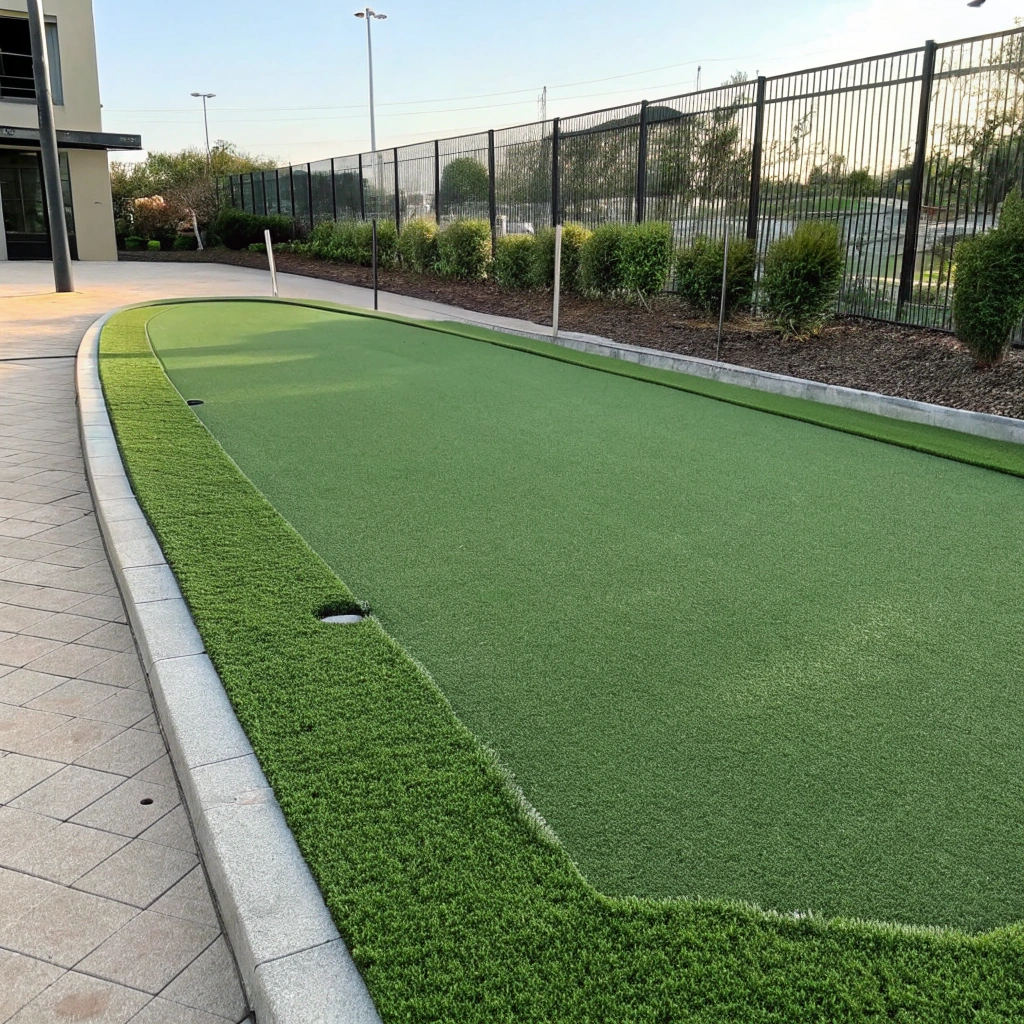
A well-specified soft fall synthetic grass system incorporates drainage at every layer. The synthetic grass surface is manufactured with a perforated or open-weave backing that allows water to pass through rapidly, eliminating surface pooling and reducing the time the play area remains unusable following rainfall. Beneath it, the shock-absorbing underlay is selected and installed to allow continued water movement through to the prepared sub-base and away from the play zone through appropriate ground drainage.
The practical result for Newcastle schools, childcare centres, and councils is a play surface that returns to full usability quickly after wet weather — with no waterlogged loose fill, no compaction from saturated material, and no hygiene concerns associated with moisture retained within the surface layer. Drainage and compliance performance work together in a correctly installed system.
Why Loose Fill Surfaces Fall Short of Soft Fall Synthetic Grass
Loose fill materials — including woodchip, rubber mulch, sand, and pea gravel — have long been used as soft fall surfaces in Australian play environments. They can meet critical fall height requirements when correctly installed and maintained, but that qualification is precisely where the challenge lies. Loose-fill surfaces are dynamic by nature, meaning their impact-attenuation performance degrades continuously through normal use, displacement, compaction, and weather exposure. Maintaining compliance is not a one-time installation decision — it is an ongoing management responsibility that demands regular attention.
The practical consequences for schools, childcare centres, and councils managing loose fill surfaces include:
- Constant raking and redistribution to restore displaced material around high-traffic zones beneath equipment
- Regular topping up as material volume decreases through decomposition, compaction, and displacement beyond the play zone
- Hygiene management — loose fill materials harbour animal waste, moisture, insects, and organic debris
- Ongoing compliance uncertainty — depth and consistency across the surface area is difficult to verify without regular inspection
Soft fall synthetic grass eliminates each of these management burdens. The surface is fixed, consistent, and delivers the same impact-attenuation performance on day one as it does years into its service life — with no raking, no topping up, and no compliance drift between maintenance visits.
What to Expect from Our Newcastle Soft Fall Installation Process
| Site Assessment & Specification | Surface Preparation & Underlay Installation | Synthetic Grass Laying & Finishing |
|---|---|---|
| We begin with a detailed site assessment of your Newcastle play environment, measuring the area, identifying equipment heights, and determining the correct critical fall height requirements under AS 4422. From this, we produce a full system specification confirming the appropriate underlay depth, density, and surface product for your installation. | With the specification confirmed, our team prepares the sub-base to the required standard — addressing drainage, levels, and edge restraints before the shock-absorbing underlay is laid. Underlay panels are installed with consistent depth across the entire play zone, correctly joined and perimeter-fixed to prevent movement under load and maintain compliance performance. | The soft fall synthetic grass surface is then laid over the prepared underlay system, cut, joined, and secured with precision across the play area. Edges are finished and fixed to a clean, safe perimeter detail. The completed surface is inspected against specification before handover, giving you a fully compliant, documented soft fall installation ready for use. |



Frequently Asked Questions
Soft fall synthetic grass is a complete impact-attenuation system combining a surface layer with a certified shock-absorbing underlay. Standard synthetic lawn is a landscaping product with no engineered fall protection or AS 4422 compliance.
AS 4422 is the Australian Standard governing playground surfacing materials and critical fall height requirements. Any playground with fixed equipment in a school, childcare centre, council facility, or similar environment is required to meet its specifications.
Critical fall height is the maximum height from which a child could fall onto the surface. It is determined by the height of the play equipment present, not the size of the play area or the age group using it.
Yes. A correctly installed soft fall system incorporates drainage through both the synthetic grass surface layer and the shock-absorbing underlay, allowing water to pass through rapidly and returning the play area to full usability quickly after rainfall.
Maintenance requirements are minimal. Periodic brushing and debris removal are sufficient to support surface presentation and drainage performance. Unlike loose fill materials, there is no raking, topping up, or compliance monitoring required between scheduled inspections.
Get a Compliance Consultation and Free Quote in Newcastle
Soft fall synthetic grass is a specialised installation, and getting the specification right from the outset is what determines whether a surface performs safely and remains compliant over its service life. We work with Newcastle schools, childcare centres, kindergartens, councils, community facilities, and residential property owners to assess each play environment individually, identify the correct system specification for the equipment and use intensity present, and deliver a compliant installation backed by documented product performance data.
Whether you are upgrading an existing playground surface, establishing a new outdoor play area, or replacing a loose-fill material that has become unmanageable, our team is ready to help. Contact us today for a compliance consultation and free quote — and give the children in your care a play surface built to protect them.
