
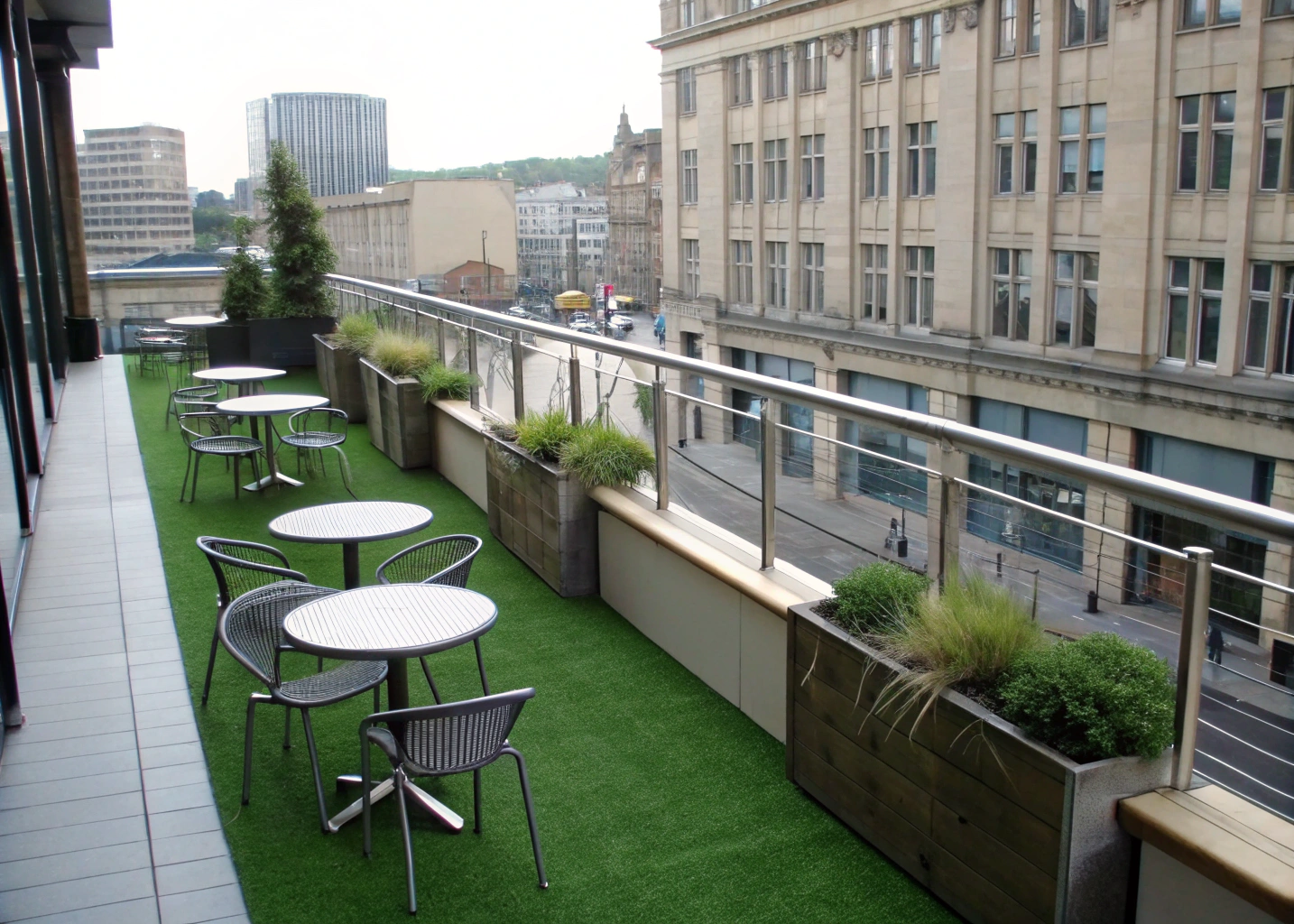
Commercial Turf Supply for Landscaping Contractors Newcastle
Landscaping contractors operating across Newcastle and the Hunter Region who regularly specify and install synthetic turf on commercial projects require more from a supplier than product availability alone. Consistent stock levels across project timelines, accurate lead times, formal product documentation, and trade pricing structures that reflect the volume and frequency of commercial contracting work are all non-negotiable requirements at the contractor level.
We supply landscaping contractors, builders, and project managers across Newcastle with commercial-grade synthetic turf products backed by the documentation and technical support that commercial installations demand. Product data sheets, warranty documentation, UV test results, and drainage specifications are available for every product in our commercial range — giving contractors the compliance paperwork needed to satisfy developer, strata, council, and facility operator procurement requirements without delays to project schedules.
Trade accounts, volume pricing, and supply arrangements structured around commercial project timelines are available to qualifying Newcastle contractors. If you are regularly specifying commercial-grade synthetic turf across Newcastle projects, contact our trade supply team to discuss a formal trade supply arrangement.

Commercial-Grade Turf vs. Residential-Grade Turf — What’s the Difference?
Commercial-grade synthetic turf and residential-grade synthetic turf are fundamentally different products — and treating them as interchangeable on a commercial project is one of the most common and costly specification errors made at the procurement stage. Residential turf is engineered for moderate, intermittent use across a private backyard or courtyard. It performs well in that context. It is not, however, built to absorb the sustained daily foot traffic, concentrated load zones, and continuous environmental exposure that define a commercial installation.
The differences are structural. Commercial-grade turf carries higher face weight and pile density, meaning the fibre system resists matting and compression under repeated heavy use. The backing construction is more robust, designed to maintain dimensional stability across large installation areas and heavy subfloor conditions. UV stabilisation ratings are calibrated for open, unshaded commercial environments where sun exposure is constant and prolonged. Drainage capacity is engineered for large surface areas where water management becomes a compliance and safety consideration.
Specifying a residential product on a commercial project does not save money — it accelerates surface failure and creates replacement costs that dwarf the original specification saving.

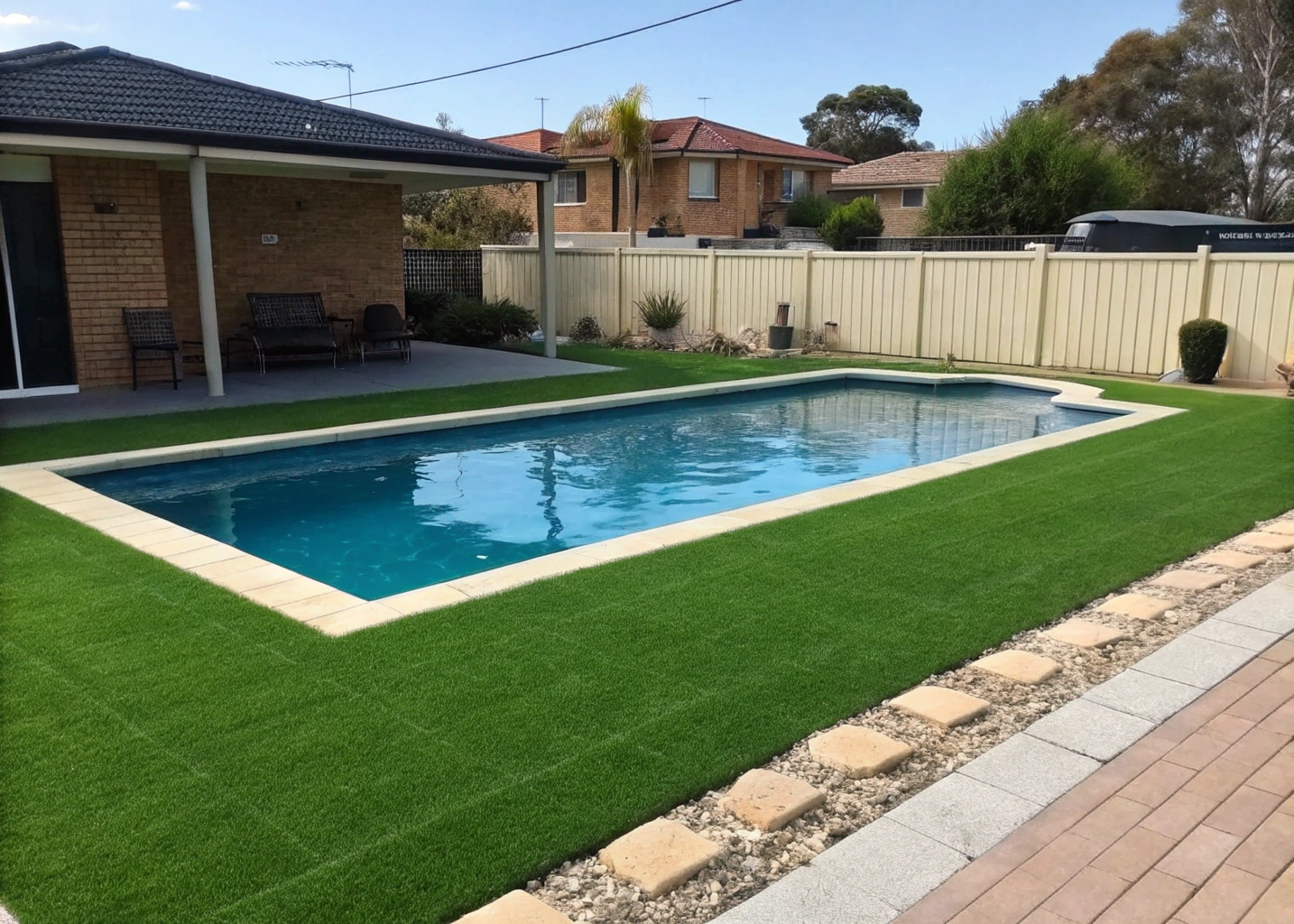
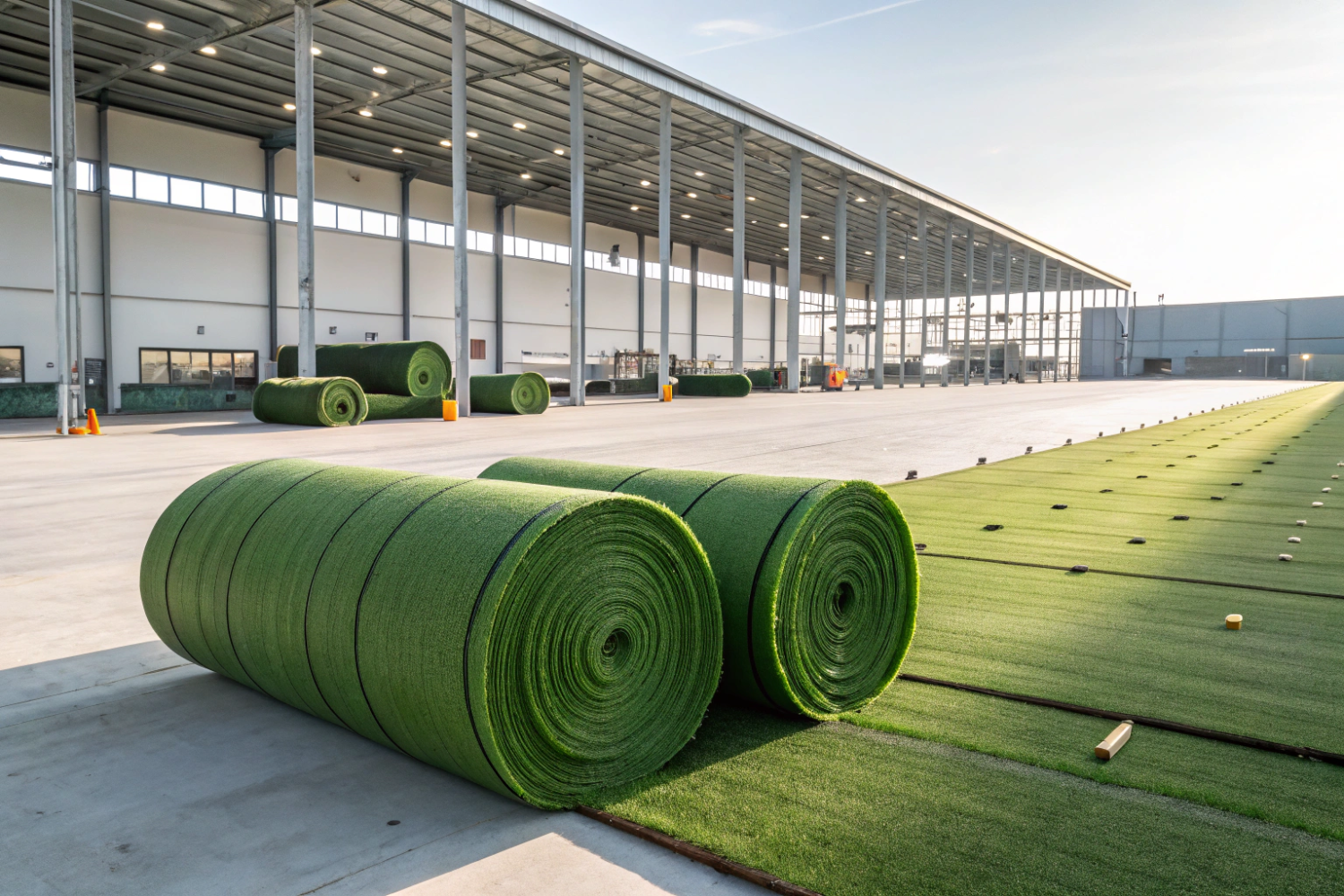
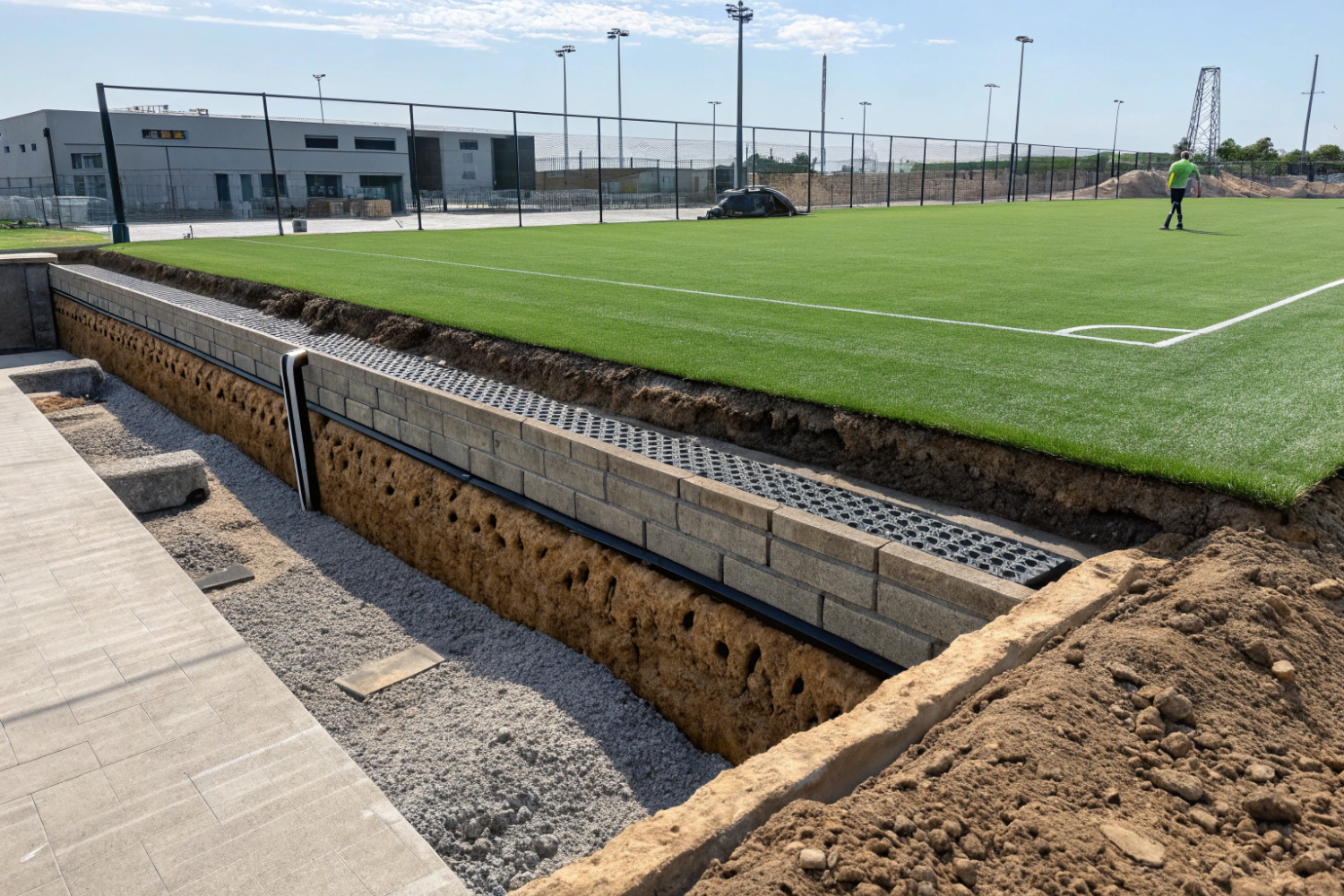
Commercial Synthetic Turf Specifications — What to Look For
| Face Weight & Pile Density | Backing Construction | UV Stabilisation Rating |
|---|---|---|
| Face weight is the primary durability indicator for commercial turf. Higher pile density means fibres are packed tighter, resisting compression and matting under sustained foot traffic. Commercial specifications require significantly greater face weight than residential equivalents — this is non-negotiable for high-use commercial zones. | Primary and secondary backing systems on commercial-grade turf maintain dimensional stability across large installations. Commercial backing withstands sustained load, cleaning agents, and subfloor movement without delaminating — critical for rooftop installations, large-format grounds, and concentrated operational use environments. | Open, unshaded commercial sites require enhanced UV stabilisation ratings. Extended sun exposure accelerates fibre degradation and colour fade in under-specified products. Commercial UV ratings are independently tested and documented, giving procurement teams verifiable performance data for compliance purposes. |
| Drainage Capacity | Warranty Coverage | Fibre System Construction |
|---|---|---|
| Commercial surface areas demand drainage performance that residential products cannot match. Engineered perforation patterns and flow rates manage water across wide areas, preventing pooling, surface hazards, and compliance issues with facility operators and councils. | Commercial procurement requires formal warranty documentation across fibre, backing, and UV performance — structured for compliance files, body corporate records, and council procurement processes. Warranty terms must align with the installation’s expected operational lifespan. | Fibre shape, denier, and construction determine pile recovery after heavy traffic. Commercial-grade fibre systems maintain upright orientation and surface texture across the full operational life — not just the first season of use. |
Face Weight and Density Requirements for High-Traffic
Face weight and pile density are the two specification metrics that most directly determine how a commercial synthetic turf surface performs under sustained heavy use — and both must meet commercial-grade thresholds to deliver an acceptable operational lifespan on a high-traffic installation.
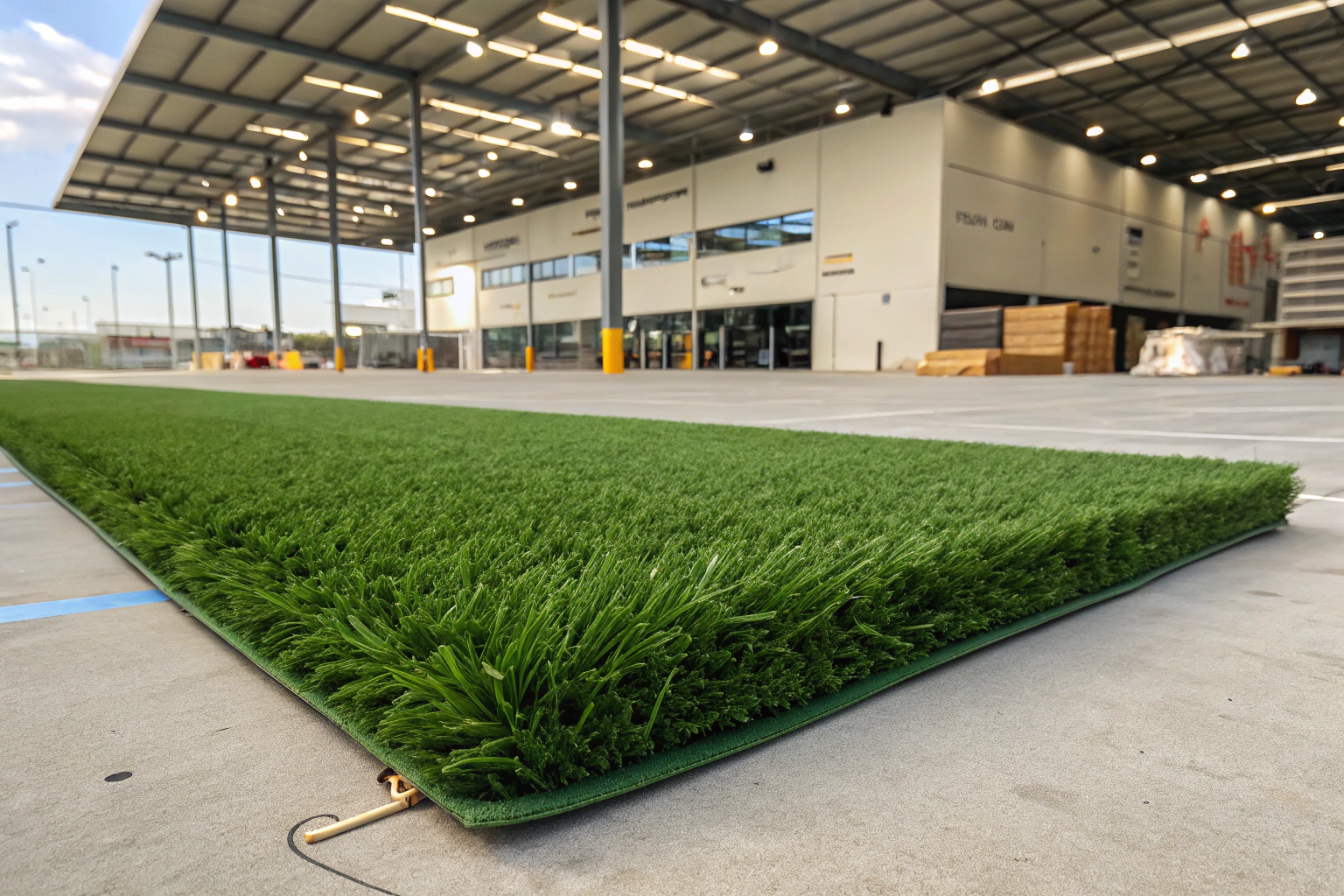
Face weight refers to the weight of the turf fibre per square yard, excluding the backing. Commercial-grade products require meaningfully higher face weight ratings than residential turf — the additional fibre mass directly translates to greater resistance against pile compression and matting in concentrated traffic zones. A low face weight product installed in a commercial environment will show visible surface degradation within months of opening.
Pile density measures how tightly individual fibres are tufted into the backing. Greater density means fibres support each other under load, maintaining upright pile orientation and consistent surface texture across the installation. For strata common areas, sports facilities, hospitality venues, and school grounds across Newcastle, face weight and density specifications should be confirmed against the anticipated daily traffic load before procurement is finalised.
Infill Systems for Commercial Grade Synthetic Turf
Infill systems are a critical and frequently overlooked component of commercial synthetic turf specification. The infill layer — installed between the turf fibres after laying — directly influences pile support, surface performance, drainage behaviour, and the long-term resilience of the installation under sustained commercial use. Selecting the wrong infill type for a commercial application is as consequential as under-specifying the turf product itself.
Silica sand infill remains the standard base infill across most commercial applications, providing ballast, fibre support, and dimensional stability across large surface areas. For sports and high-traffic recreational installations, crumb rubber or hybrid infill systems are specified to deliver the additional shock absorption and surface resilience that athletic and active use environments require. Antimicrobial and odour-resistant infill compounds are specified for school grounds, childcare facilities, and pet-accessible commercial areas where hygiene performance is a procurement requirement.
Commercial infill specification should account for surface temperature management, drainage interaction, and the anticipated foot traffic profile of the installation. Our Newcastle trade supply team provides infill product recommendations matched to each commercial application type and turf product specification.
Matching Turf Product to Commercial Application Type
Not all commercial synthetic turf applications place identical demands on the surface, and product selection should reflect the specific operational conditions of each installation type rather than a generic commercial-grade assumption. Matching the correct product specification to the application is where procurement decisions either protect or undermine the long-term performance of the installation.
High-footfall pedestrian areas — strata common areas, retail centre landscaping, and commercial office grounds — require products weighted toward pile density and backing stability to handle concentrated daily traffic without surface degradation. Sports and recreation facilities prioritise fibre resilience and drainage performance, where rapid water clearance and consistent surface texture under athletic use are the defining specification requirements. Hospitality and rooftop installations demand products with superior UV stabilisation and structural backing integrity, given the open exposure conditions and the elevated subfloor environments involved.
Our Newcastle trade supply team works directly with commercial buyers and specifying contractors to identify the correct product grade and specification for each application type before supply is confirmed.
Commercial Synthetic Turf Maintenance Considerations
Commercial synthetic turf installations require a structured maintenance programme to preserve surface performance, appearance, and compliance across the operational life of the installation. While synthetic turf eliminates the irrigation, mowing, and seasonal treatment costs associated with a natural lawn, commercial-grade surfaces operating under sustained daily use have specific maintenance requirements that facility operators and property managers need to account for in their asset management planning.
Regular grooming and pile lifting prevent fibre matting in high-traffic zones and maintain the consistent surface texture that commercial installations are specified to deliver. Infill redistribution is required periodically across large surface areas where foot traffic concentrates infill migration toward lower-use zones. Debris removal and surface cleaning — using commercial-grade equipment and approved cleaning compounds compatible with the turf backing system — maintains hygiene standards across strata common areas, school grounds, hospitality venues, and council facilities.
Maintenance frequency scales directly with foot traffic volume and application type. Our Newcastle trade supply team provides maintenance specification guidance alongside product supply, ensuring facility operators and contractors have the correct information to protect the long-term performance of their commercial turf investment.
Large Format Supply — How We Handle Commercial Project Volumes
Commercial synthetic turf projects operate on procurement timelines, site delivery schedules, and installation sequences that have no tolerance for stock shortfalls or supply inconsistencies mid-project. A residential turf purchase and a large-format commercial supply order are fundamentally different logistical exercises — and the supplier’s capacity to manage that difference determines whether a commercial project runs to schedule or absorbs costly delays.
We maintain consistent stock availability across our commercial grade synthetic turf range to support Newcastle projects of significant scale — from mid-size strata and hospitality installations through to large commercial developments, council facility upgrades, and multi-stage project supply arrangements. Orders are fulfilled against confirmed project schedules, with delivery coordination managed to align with site preparation and installation sequencing.
Formal purchase orders, product documentation, and delivery records are provided as standard on all commercial supply orders, supporting the procurement and compliance requirements of developers, facility operators, body corporates, and government procurement teams. Newcastle landscaping contractors and project managers working across multiple concurrent commercial installations can discuss ongoing supply arrangements with our trade team directly.
Frequently Asked Questions — Commercial Grade Turf Supply Newcastle
Commercial-grade turf is engineered with higher face weight, denser pile, more robust backing, enhanced UV stabilisation, and superior drainage capacity — specifications that residential-grade products are not built to meet under sustained commercial use.
Our commercial range suits strata common areas, retail and office landscaping, sports and recreation facilities, hospitality venues, rooftop installations, school and childcare grounds, council facilities, and large-scale residential developments requiring commercial grade surface performance.
Yes. Trade pricing, volume supply arrangements, and formal trade accounts are available to qualifying Newcastle landscaping contractors, builders, and project managers regularly specifying commercial grade synthetic turf across commercial installations.
Yes. Product data sheets, warranty documentation, UV test results, drainage specifications, and technical compliance paperwork are available for every product in our commercial range.
Face weight requirements vary by application and traffic volume. Our Newcastle trade supply team provides specification guidance matched to your specific installation type and anticipated daily foot traffic load.
Infill selection depends on the application. Silica sand suits most commercial pedestrian surfaces. Sports and recreation installations typically require crumb rubber or hybrid systems. School and childcare grounds may require antimicrobial infill compounds.
Get a Commercial Turf Supply Quote for Your Newcastle Project
Commercial-grade synthetic turf supply in Newcastle starts with the right product specification — and that begins with a conversation. Whether you are a property developer, strata manager, facility operator, council procurement team, or landscaping contractor managing a commercial installation, we are equipped to support your project from product selection through to supply.
We provide formal product documentation, technical specifications, trade pricing, and large-volume supply arrangements suited to commercial project timelines and procurement requirements. Every commercial inquiry is handled with the detail and response time that commercial projects demand.
Contact our Newcastle trade supply team to discuss your project scope, confirm the correct commercial grade product specification, and receive a formal supply quote. We supply across Newcastle and the broader Hunter Region — get in touch today.
