
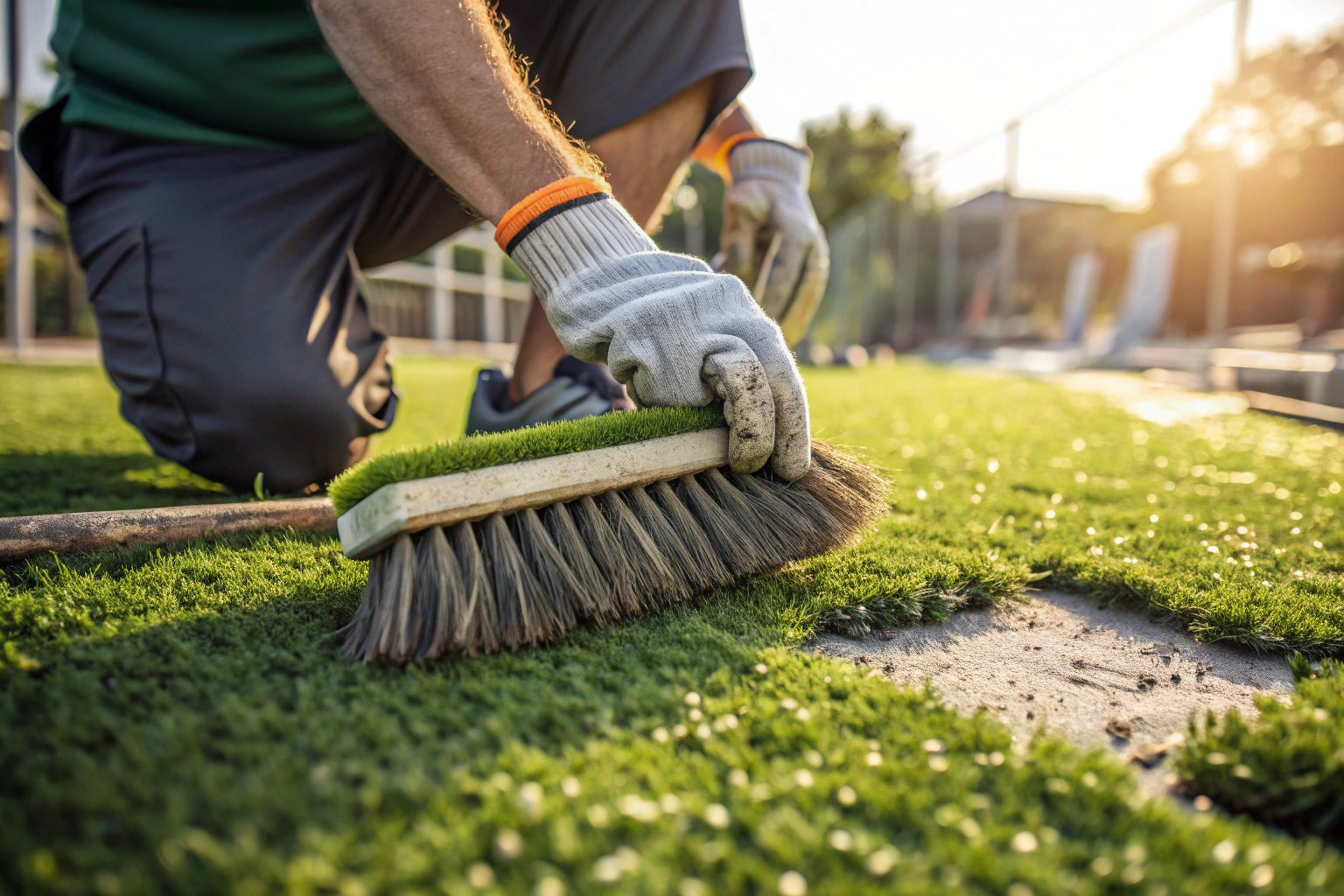
Why Low Maintenance Doesn’t Mean No Maintenance
Synthetic grass earns its reputation as a low-maintenance surface — no mowing, no watering, no reseeding, and no seasonal fertilising. For Newcastle homeowners and facility managers, that freedom is a significant part of the investment’s appeal. But a professionally installed artificial lawn still benefits from structured, periodic care to maintain the performance and appearance it was designed to deliver.
Over time, organic debris such as leaves, seed pods, and dust accumulates within the pile. Infill material shifts under foot traffic and compacts in high-use zones. Edges and joins experience gradual movement from ground settlement and temperature variation. Drainage points can slow as fine particles accumulate within the backing. Left unaddressed, each of these is a minor issue. Allowed to compound over months and years, they collectively reduce surface performance, accelerate material wear, and shorten the usable life of the installation.
Scheduled professional maintenance keeps each of these factors managed proactively — preserving the cushioning, drainage capacity, pile structure, and overall appearance that made the investment worthwhile in the first place.

Infill Top-Up and Redistribution Services for Newcastle Lawns
Infill material plays a critical role in the performance of any synthetic grass installation. It supports the pile fibres in an upright position, provides the surface cushioning that makes the lawn comfortable underfoot, and contributes directly to the drainage performance of the system. Over time and under regular use, infill migrates — shifting toward the perimeter, compacting in high-traffic zones, and thinning out in areas that take the most consistent foot pressure.
In Newcastle’s climate, this process is accelerated by the combination of summer heat, seasonal rainfall events, and the high-traffic patterns common to family backyards, pet areas, and commercial surfaces. A lawn with depleted or poorly distributed infill loses its cushioning, its pile support, and ultimately its drainage efficiency — all of which affect both the feel and the longevity of the surface.
Our infill top-up and redistribution service restores material to the correct depth and distributes it evenly across the full surface area — returning the lawn’s performance characteristics to their original standard and extending the productive life of the installation.
Drainage Point Checks and Performance Monitoring
Drainage performance is one of the most important functional characteristics of a quality synthetic grass installation. A well-installed surface moves water through the pile, backing, and sub-base efficiently — eliminating pooling, reducing surface runoff, and keeping the lawn usable immediately after rainfall. Over time, fine particles, compacted infill, and organic debris accumulate within the drainage layer, gradually reducing its capacity to move water at the rate it was designed to handle.
In Newcastle, where summer storm events can deliver significant rainfall volume in short periods, a drainage system operating below capacity creates real problems — surface pooling, extended drying times, and in severe cases, water migrating beneath the backing and destabilising the sub-base beneath.
Our drainage point checks assess flow performance across the full surface during each scheduled maintenance visit, identifying areas where water movement has slowed and clearing blockages before they develop into more significant issues. Consistent monitoring keeps the drainage system performing to its original specification — protecting both the surface and the investment it represents.
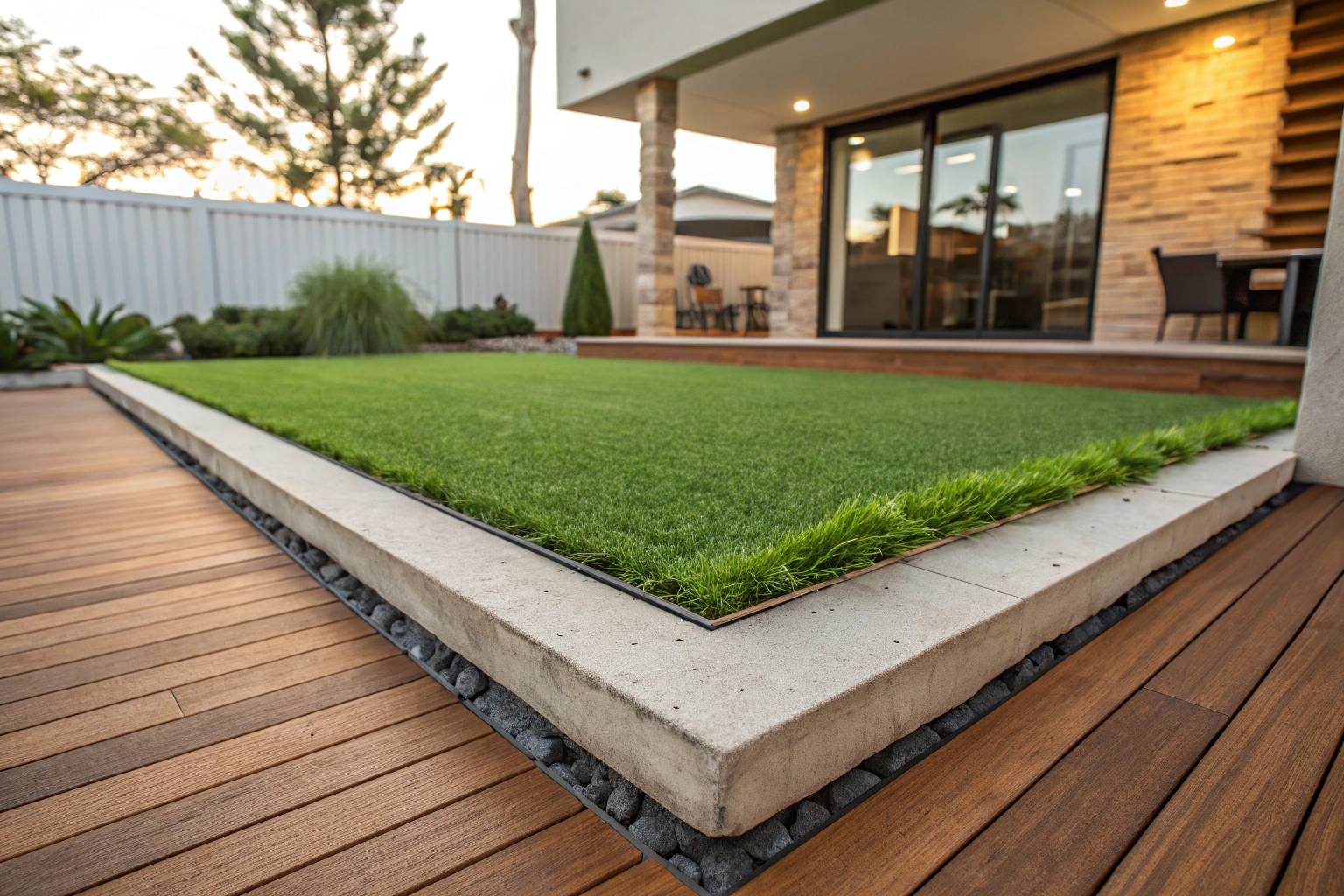
Debris Removal and Pile Brushing — Keeping Your Turf Upright and Free-Draining
Debris removal and pile brushing form the foundation of any professional artificial turf maintenance program. In Newcastle’s coastal and semi-urban environment, organic material — leaves, seed pods, pollen, and airborne dust — settles consistently into synthetic grass surfaces regardless of the season. Left to accumulate, this material compacts within the pile, restricts drainage, and creates conditions that accelerate fibre wear.
Mechanical brushing lifts the pile fibres back to their upright position, counteracting the flattening effect of repeated foot traffic and restoring the surface’s natural appearance and drainage capacity. In high-use areas — children’s play zones, entertaining spaces, and pet runs — pile compression occurs faster and benefits most from regular professional attention.
Our debris removal and brushing service covers the full surface area on each visit, ensuring the pile remains upright, the drainage backing stays unobstructed, and the lawn retains the clean, well-maintained appearance that reflects the quality of the original installation.
Edge and Join Inspections — Catching Problems Before They Cost You
The edges and joins of a synthetic grass installation are the points most vulnerable to movement over time. Ground settlement, temperature-driven expansion and contraction, and the repeated pressure of foot traffic along boundaries all contribute to gradual separation between the turf and its fixing points. In Newcastle’s variable climate — warm, humid summers followed by cooler, drier periods — this cycle of expansion and contraction accelerates the process across all property types.
During each scheduled maintenance visit, our team conducts a thorough inspection of all perimeter edges, internal joins, and transition points, checking for:
- Edge lifting along garden borders, paving interfaces, and fencing lines
- Join the separation between turf panels in larger installations
- Fixing point failure where nails, staples, or adhesive bonds have weakened
- Buckling or rippling caused by infill displacement or ground movement beneath the backing
Identifying these issues at the earliest stage allows for minor corrective work that takes minutes to address — rather than the far more involved repair or partial replacement that results from leaving them unattended. Scheduled edge and join inspections are one of the most cost-effective components of any professional turf maintenance program.
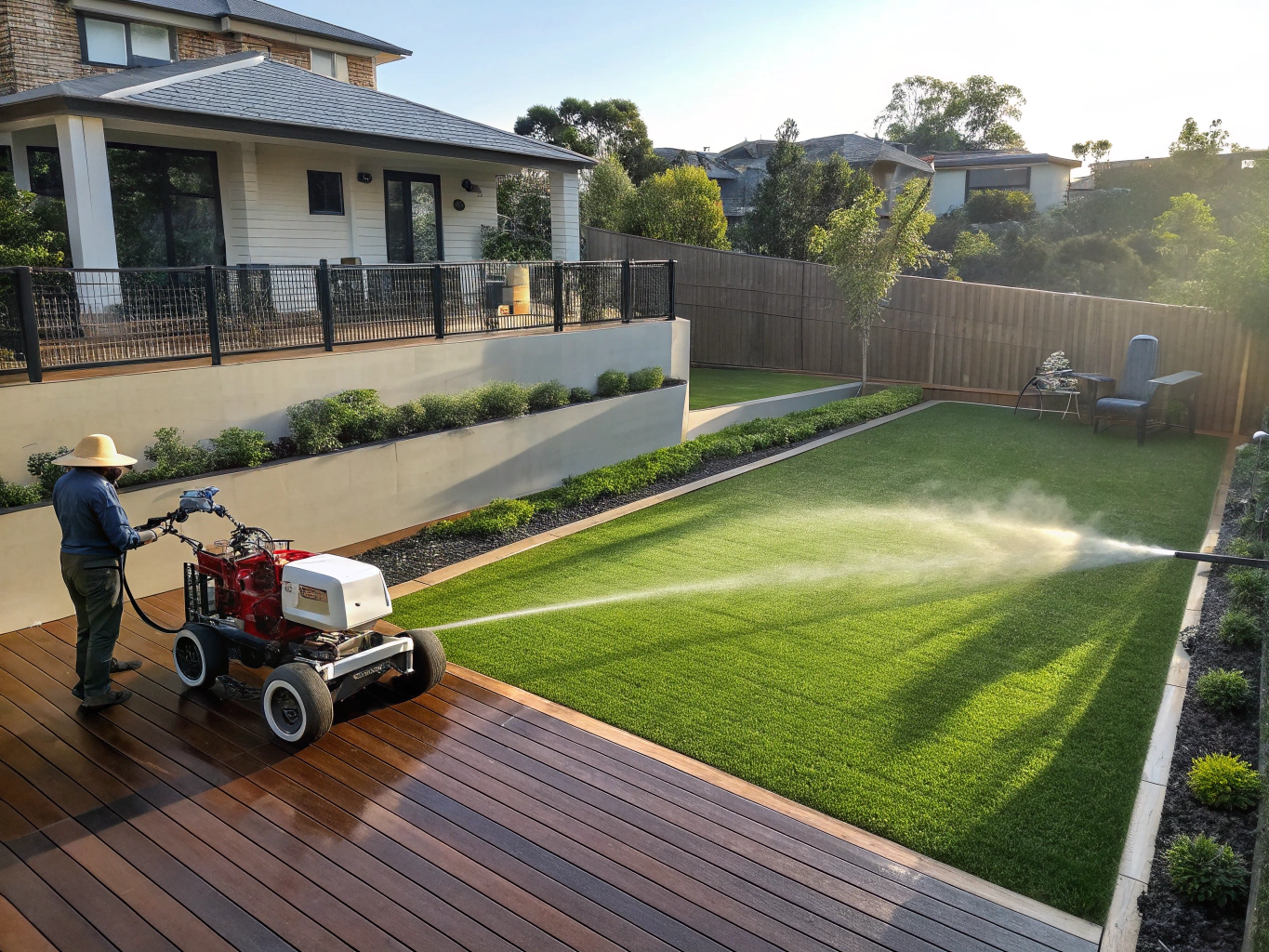
Sanitising Treatments for Pet Areas and High-Traffic Surfaces
Synthetic grass is inherently more hygienic than a natural lawn — it doesn’t harbour the same soil-borne bacteria, and its drainage backing moves liquid through the surface efficiently. However, pet areas, children’s play zones, and high-traffic commercial surfaces accumulate biological material over time that requires periodic professional treatment to maintain a clean, odour-free, and hygienic surface.
For Newcastle homes with dogs, pet urine residue can concentrate within the infill and backing over time, producing persistent odour that standard rinsing does not fully address. In commercial settings — childcare centres, school playgrounds, and hospitality venues — hygiene standards require a more structured approach to surface sanitisation that goes beyond routine debris removal.
Our professional sanitising treatments use appropriate cleaning agents applied evenly across the full surface, targeting bacterial buildup, organic residue, and odour-causing compounds within the pile and infill layers. For pet households and commercial clients, periodic sanitising is a practical component of any scheduled maintenance program — keeping the surface fresh, safe, and performing as intended year-round.
Signs Your Synthetic Lawn Is Overdue for Professional Attention
Most Newcastle property owners recognise when a natural lawn is struggling — but the signs that a synthetic grass installation needs professional attention are less obvious and easy to overlook until the issues become more involved to address. Knowing what to look for allows for earlier intervention and significantly lower maintenance costs over the life of the surface.
Common indicators that your artificial turf is due for professional care include:
- Flattened or matted pile that no longer returns to an upright position after foot traffic
- Uneven surface texture caused by infill displacement or compaction in high-use zones
- Pooling or slow drainage following rainfall or hosing
- Persistent odour in pet areas that standard rinsing hasn’t resolved
- Visible edge lifting or separation along garden borders, paving lines, or joins between panels
- Discolouration or dullness across the pile surface from accumulated debris and organic residue
- Rippling or buckling across any section of the surface
If any of these are present on your Newcastle property, a scheduled maintenance visit will identify the cause and address it before further wear occurs.
Early Intervention — The Smart Way to Protect Your Turf Investment
The most cost-effective approach to artificial turf maintenance is consistent, scheduled care that identifies and addresses minor issues before they develop into significant ones. A small section of edge lifting corrected during a routine visit costs a fraction of what the same issue costs after months of further movement. Infill displacement identified early is a straightforward redistribution job — left unmanaged, it leads to accelerated fibre wear and surface irregularity that requires more involved remediation.
Scheduled professional maintenance creates a documented record of each surface’s condition over time, allowing our team to track changes, identify patterns, and intervene at the point where the work is still minor. For Newcastle homeowners, this means protecting a significant installation investment with a comparatively modest ongoing commitment. For commercial facility managers, it means surfaces that remain safe, compliant, and consistently presentable without the disruption of reactive repair work.
Proactive maintenance is not an additional cost — it is the mechanism through which the full value of a quality synthetic grass installation is realised across its complete service life.

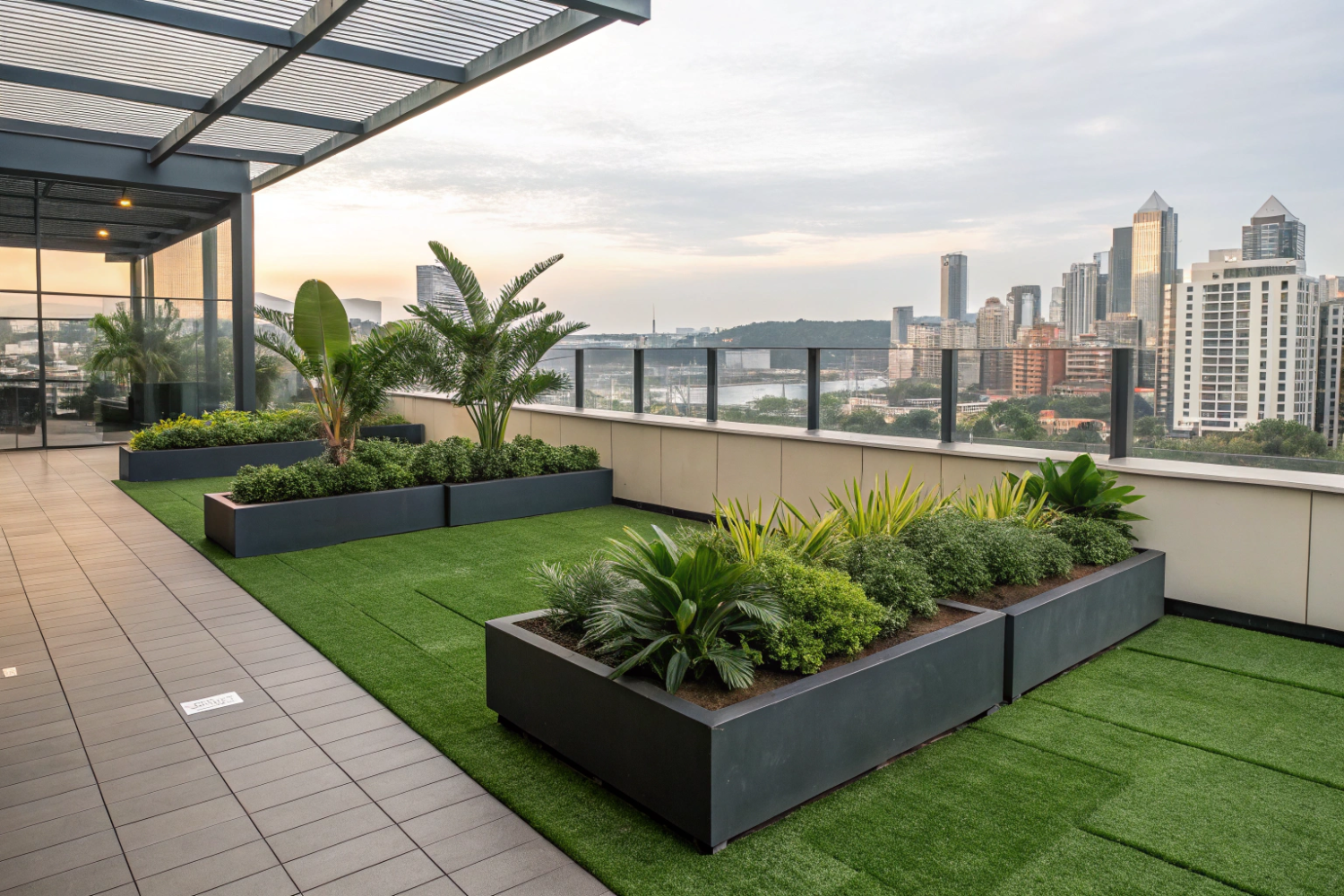


Frequently Asked Questions — Artificial Turf Maintenance Newcastle
Frequency depends on use, traffic, and environmental conditions. A residential backyard with light use typically benefits from professional attention two to four times per year. High-traffic areas, pet runs, and commercial surfaces generally require more frequent scheduled visits.
A standard visit covers debris removal, full-surface pile brushing, infill inspection and redistribution where required, edge and join checks, and drainage point assessment. Sanitising treatments are available as an additional service for pet areas and commercial surfaces.
Yes. Fine particles, compacted infill, and organic debris accumulate within the drainage layer over time, gradually reducing flow performance. Regular drainage point checks identify slowdowns early and clear blockages before they affect surface usability or sub-base stability.
We apply professional-grade sanitising treatments across the full surface, targeting bacterial buildup and odour-causing compounds within the pile and infill layers. Standard rinsing does not fully address concentrated pet urine residue — periodic professional treatment is the effective solution.
Repeated foot traffic compresses pile fibres over time, particularly in high-use zones such as pathways, play areas, and pet runs. Professional mechanical brushing lifts the pile back to its upright position, restoring surface appearance and drainage capacity.
Get a Tailored Turf Maintenance Program for Your Newcastle Property
A quality synthetic grass installation represents a significant investment in your property — one that performs best when supported by structured, professional care. Whether you manage a residential backyard in Adamstown, a strata complex in Charlestown, or a commercial facility anywhere across the Newcastle region, we can build a maintenance program around your surface’s specific use, traffic level, and care requirements.
Contact our team today to discuss a tailored artificial turf maintenance schedule for your property. We offer flexible program options for both residential and commercial clients, with free quotes and no obligation. Get in touch and keep your synthetic lawn performing exactly as it should — year-round.
