
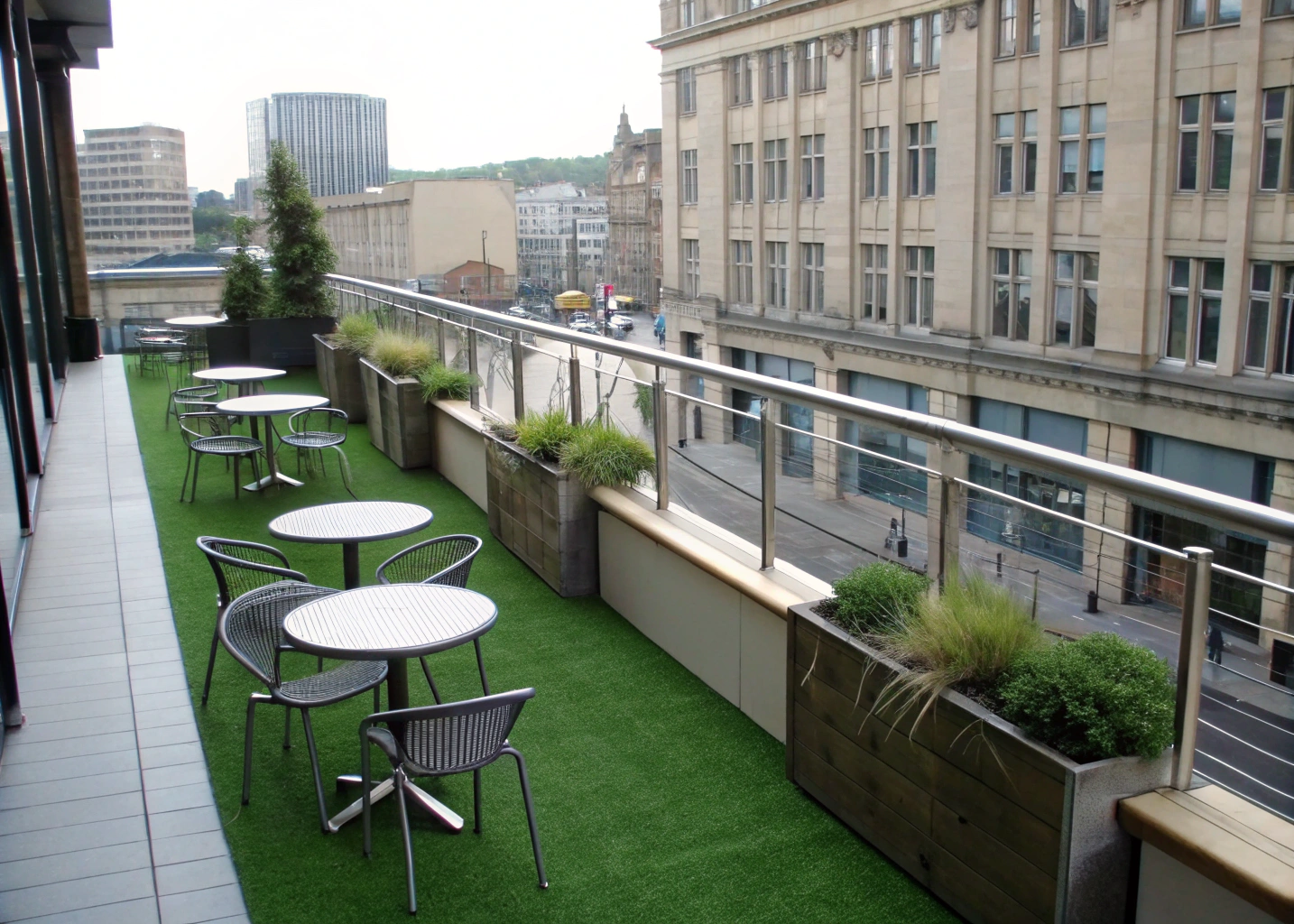
What Is Turf Infill and What Does It Do in a Synthetic Grass Installation
Turf infill is the granular material distributed through the pile of a synthetic grass installation after the turf has been laid and secured. It sits between and beneath the individual blades, performing a range of functions that directly determine how the surface looks, feels, and performs across its lifespan. Most customers planning a synthetic grass installation focus their attention on the turf product itself, but the infill system is what gives that product its structure and functionality once it’s in the ground.
The functions infill performs are technical and interdependent. It weighs the turf down and stabilises it against lateral movement and lifting at the edges. It supports the pile in an upright position, maintaining the lawn’s appearance under foot traffic and UV exposure. It contributes to surface cushioning and underfoot comfort, assists drainage performance by maintaining open channels through the pile, and in specific product types, provides temperature moderation benefits relevant to Newcastle’s warm summer conditions.

Why Infill Specification Matters More Than Most Customers Realise
Infill selection is a technical decision, not an afterthought. The default approach for many installations is to source the cheapest available product and apply it at a general rate, and the results of that approach show up within the first twelve to eighteen months of the installation’s life. Pile collapse, drainage slowdown, and surface hardening are the most common consequences of under-specified or incorrectly applied infill, and all of them are largely avoidable with the right product choice from the outset.
Different turf products have different pile structures, fibre densities, and backing configurations that directly influence which infill type performs best and at what application rate. A residential lawn turf specified for a backyard in Adamstown has different infill requirements than a sports surface in a school environment or a pet zone installation in a high-traffic yard. Getting the specification right at the point of supply means the surface performs as intended, drains correctly, holds its appearance, and reaches its expected service life without premature degradation.
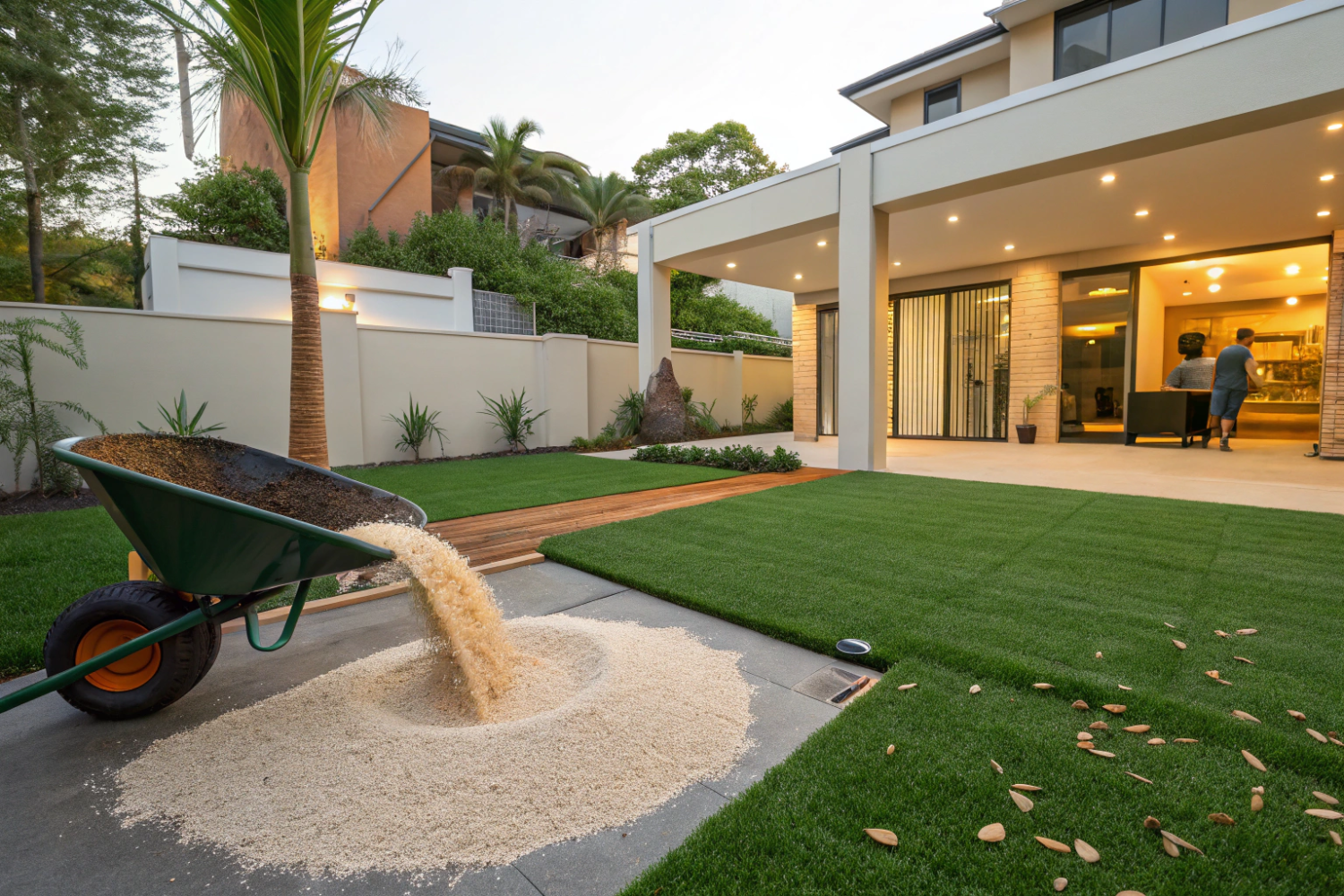
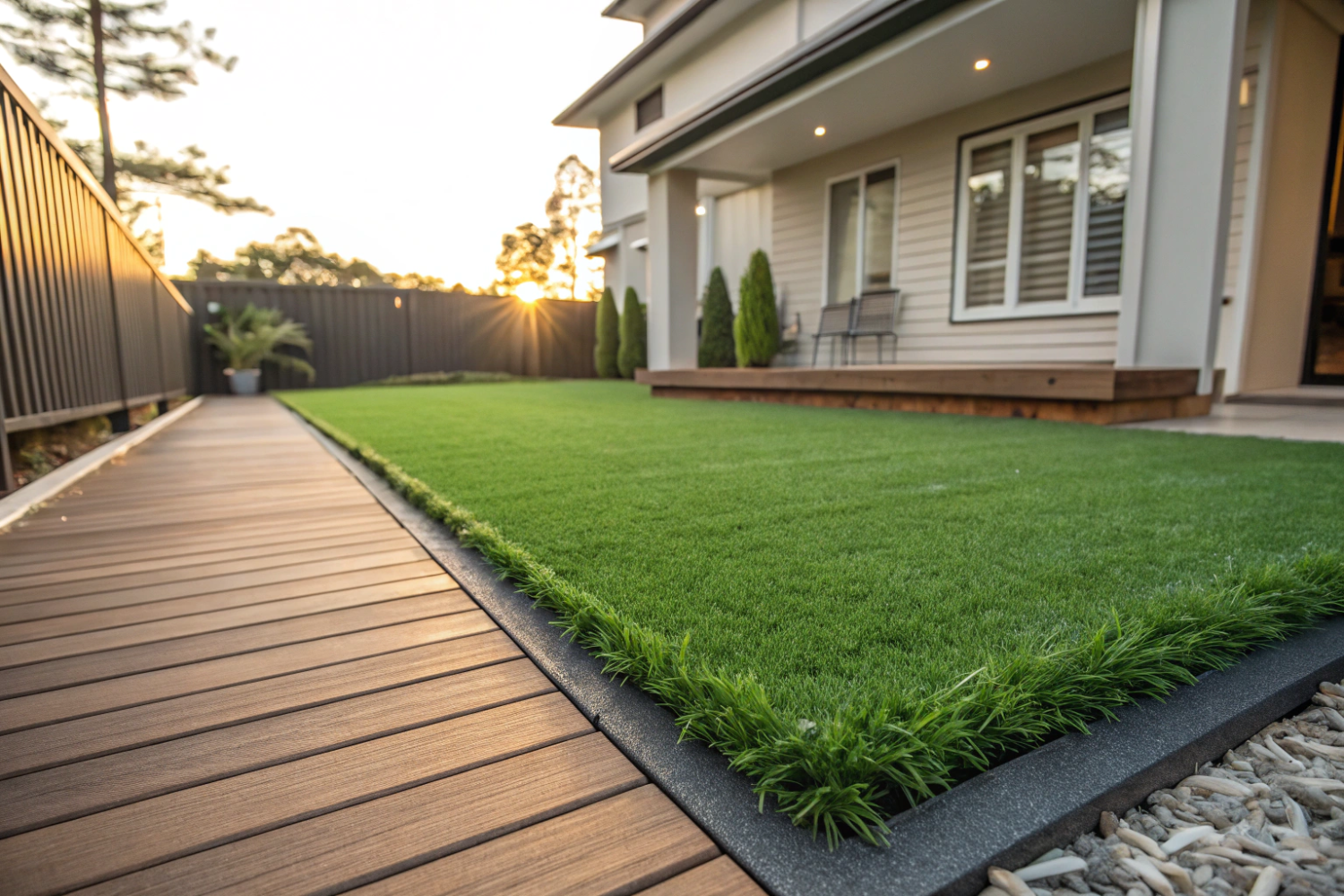
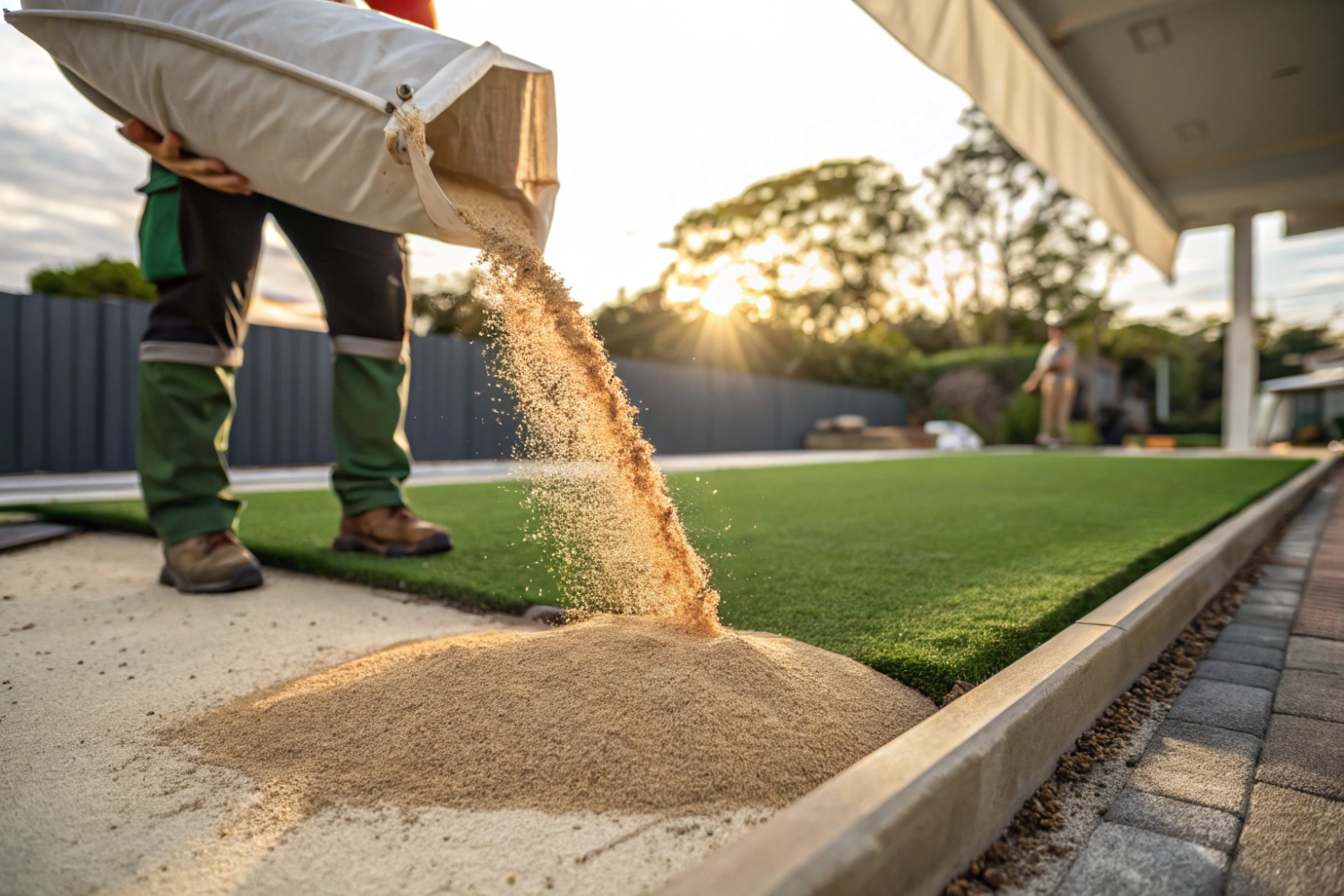
Infill Product Types and Their Applications
| Silica Sand | Rubber Crumb | Coated & Organic Sand | Antimicrobial Infill |
|---|---|---|---|
| The most widely used infill product across residential and commercial synthetic grass installations. Silica sand delivers reliable stability, consistent drainage performance, and broad compatibility with standard turf products in both backyard and commercial environments throughout Newcastle. | Specified for sports surfaces and play areas where additional shock absorption is a priority. Rubber crumb infill provides the impact attenuation required for active use environments, including school ovals, recreational courts, and children’s play zones across the Hunter Region. | Coated and organic sand infill products are engineered to moderate surface temperature — directly relevant to Newcastle’s hot summers where standard silica sand retains heat. These products reduce pile temperature under direct sun exposure, improving barefoot comfort during warmer months. | Designed for pet areas and childcare environments where hygiene and odour control are priorities. Antimicrobial infill products actively inhibit bacterial growth within the pile, maintaining surface hygiene in high-use zones where standard infill products would allow odour and contamination to build over time. |
Signs Your Existing Synthetic Grass Needs an Infill Top-Up
Infill depletion develops gradually, which means many homeowners and property managers don’t recognise it until surface performance has already declined significantly. Knowing what to look for allows the top-up supply to be sourced and applied before the installation reaches the point where pile recovery becomes difficult.
The most common indicators that an existing synthetic grass installation needs an infill top-up include:
- Pile lying flat and failing to recover its upright position after foot traffic or furniture load is removed
- Surface drainage slowing noticeably after rainfall, with water pooling in areas that previously drained freely
- Increased surface hardness underfoot, particularly in high-traffic zones such as pathways, play areas, and pet runs
- Odour development in pet zones where antimicrobial infill has depleted and bacterial activity has increased within the pile base
- Visible pile matting in concentrated traffic areas that brushing alone cannot correct
- Edge lifting, where infill loss near the perimeter has reduced the turf’s stability and allowed movement at the joins
If any of these signs are present across a Newcastle installation, infill top-up supply is typically the most cost-effective intervention available before full replacement becomes necessary.
Infill Top-Up Supply for Existing Synthetic Grass in Newcastle
Synthetic grass infill doesn’t stay in place indefinitely. In high-traffic areas, pet zones, and surfaces exposed to heavy rainfall, infill displaces and compacts progressively over time — migrating toward the edges of the installation, compacting at the base of the pile, or washing through the drainage layer during periods of heavy rain. The result is a surface where pile support has degraded, drainage performance has slowed, and the lawn is no longer performing the way it did at installation.
We supply infill top-up product for existing synthetic grass installations across Newcastle and the Hunter Region, providing homeowners and property managers with access to the correct infill type and quantity to restore surface performance without replacing the turf itself. Top-up supply is available across the full product range — silica sand, rubber crumb, coated sand, and antimicrobial infill — matched to the original infill specification where known, or assessed against the existing turf product and application to determine the most appropriate replacement product.
How Infill Supports Pile Structure and Surface Appearance Over Time
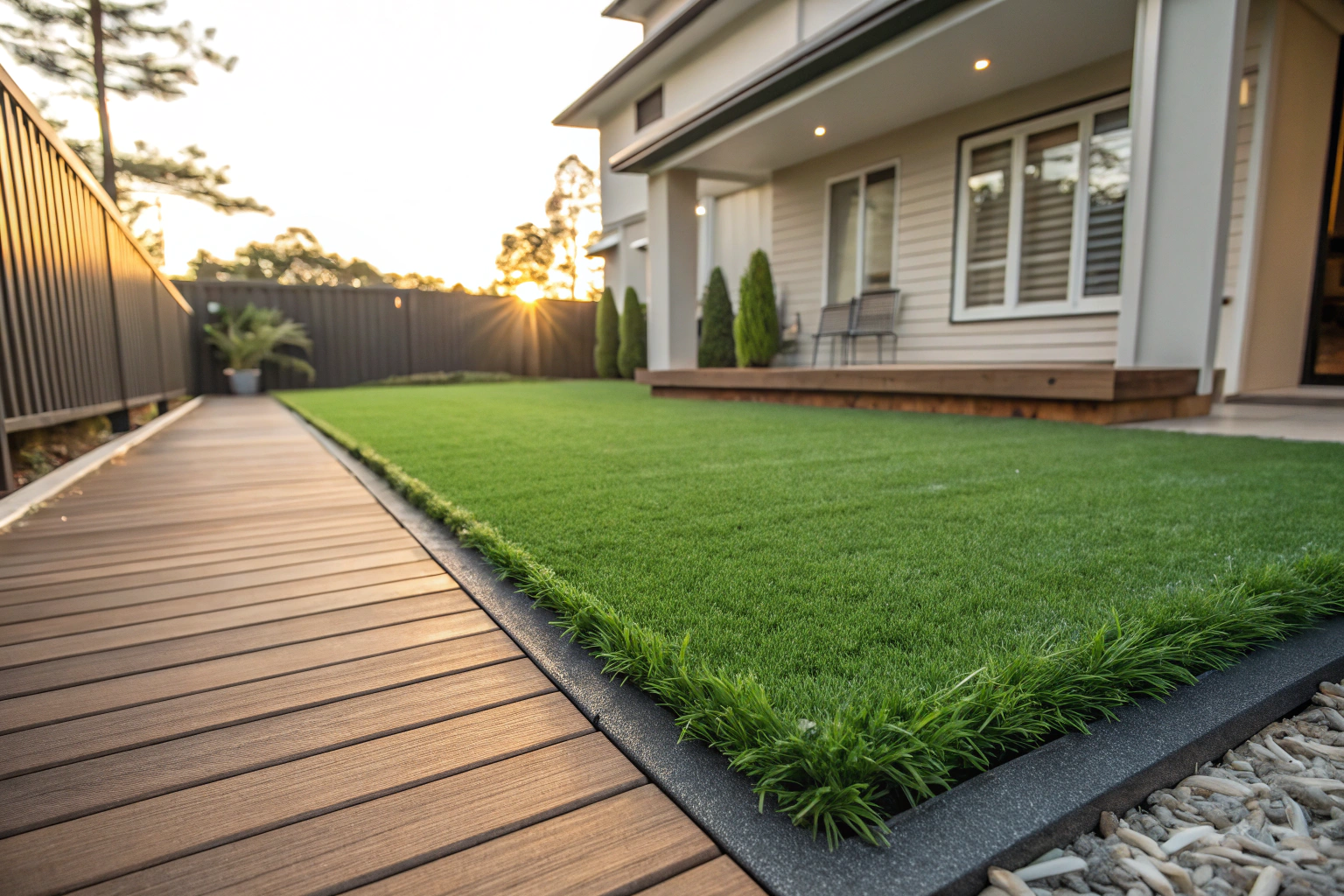
The pile of a synthetic grass product is engineered to stand upright — but it doesn’t maintain that position on its own. Infill material packed through the pile base is what holds individual fibres in an upright position under repeated foot traffic, UV exposure, and the compressive load of furniture, play equipment, and pet activity. Without adequate infill, fibres flatten and mat, and the surface takes on the worn, compacted appearance that gives lower-quality installations their reputation.
Correctly specified and applied infill protects the pile by:
- Distributing compressive load across the fibre base rather than allowing it to concentrate at individual blade roots
- Maintaining fibre separation that keeps the surface looking full and natural over time
- Reducing fibre abrasion caused by direct contact between blades under foot traffic
- Supporting the backing material and preventing it from flexing excessively under load
The result is a surface that holds its appearance through years of regular use. Across Newcastle installations — from family backyards in New Lambton to commercial surfaces in the Hunter Region — correct infill specification is what separates a synthetic grass installation that looks great at five years from one that looks tired at two.
Infill Top-Up Supply for Existing Synthetic Grass in Newcastle
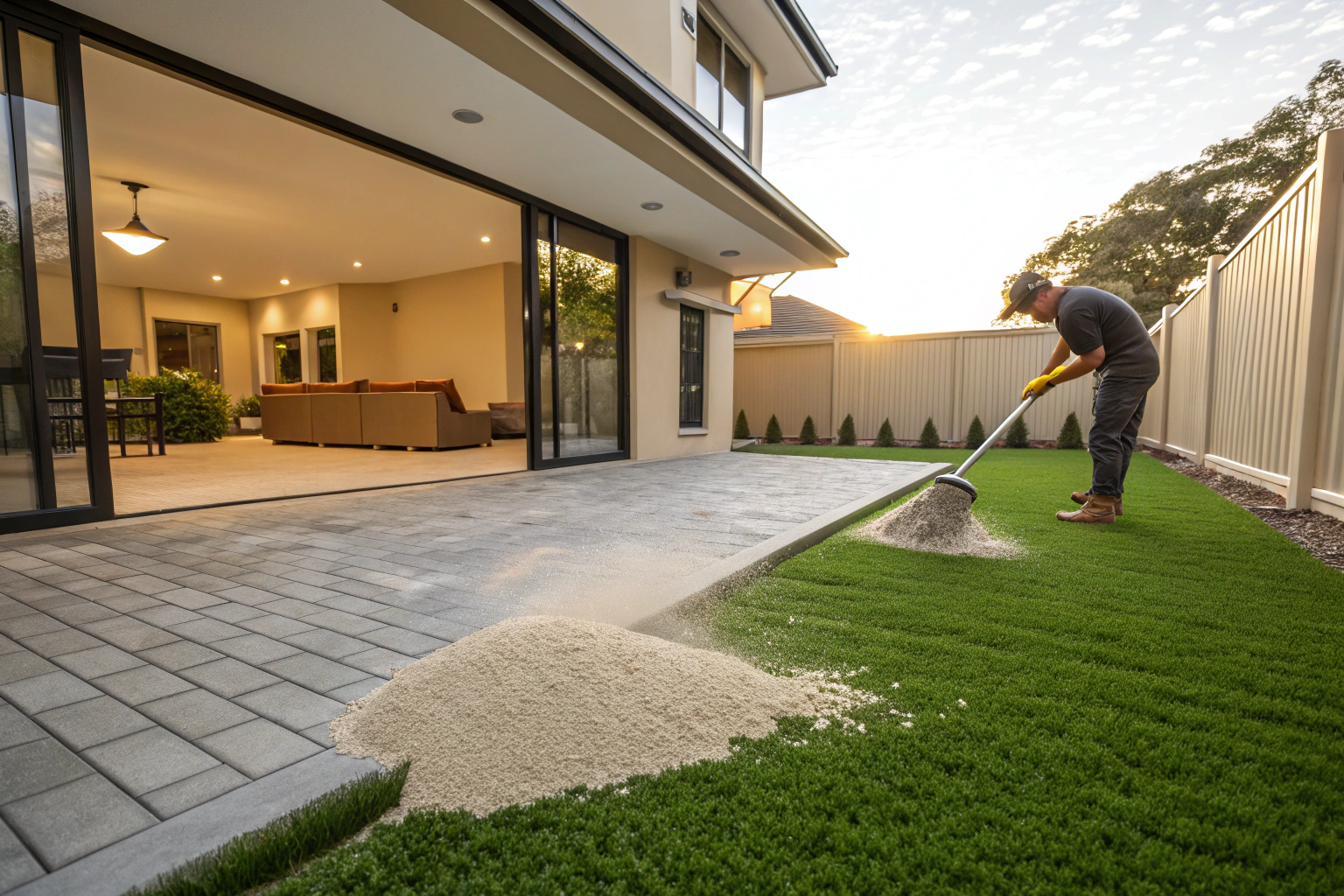
Synthetic grass infill doesn’t stay in place indefinitely. In high-traffic areas, pet zones, and surfaces exposed to heavy rainfall, infill displaces and compacts progressively over time — migrating toward the edges of the installation, compacting at the base of the pile, or washing through the drainage layer during periods of heavy rain. The result is a surface where pile support has degraded, drainage performance has slowed, and the lawn is no longer performing the way it did at installation.
We supply infill top-up product for existing synthetic grass installations across Newcastle and the Hunter Region, providing homeowners and property managers with access to the correct infill type and quantity to restore surface performance without replacing the turf itself. Top-up supply is available across the full product range — silica sand, rubber crumb, coated sand, and antimicrobial infill — matched to the original infill specification where known, or assessed against the existing turf product and application to determine the most appropriate replacement product.
Infill and Drainage Performance in Synthetic Grass Installations
Drainage performance in a synthetic grass installation is a function of the entire system — the backing’s perforation rate, the sub-base preparation, and the infill material working together to move water through the pile and into the ground beneath. Infill plays a direct role in this process. The right product, applied at the correct rate, maintains open channels through the pile base that allow water to pass freely. The wrong product, or the right product applied incorrectly, closes those channels and creates a surface that pools and drains slowly.
Silica sand is the standard infill choice for drainage performance across residential and commercial installations, providing consistent particle sizing that maintains channel structure under load. In applications where rubber crumb or coated sand products are specified, the infill rate and application method are adjusted to preserve drainage function alongside the additional performance benefits those products deliver. We help Newcastle customers across suburbs, including Charlestown, Cardiff, and Wallsend, select and apply infill product in a way that protects drainage performance for the life of the installation.
Calculating the Right Infill Quantity for Your Newcastle Installation
Infill quantity is calculated by weight, and the correct application rate varies across turf products, pile heights, and intended uses. A standard residential lawn product has a different infill requirement to a sports surface turf or a pet-specific product with an open-flow backing — and applying a generic rate across all three produces under-infilled results in at least two of them.
The variables that determine the correct infill quantity for a Newcastle installation include:
- Turf product specified — pile height, fibre density, and backing configuration all influence infill rate
- Area being installed — total square metreage determines base quantity before application rate adjustments
- Intended use — residential, commercial, sports, and pet applications each carry different infill requirements
- Infill product type — silica sand, rubber crumb, and coated sand products have different particle weights and application rates
We assist Newcastle homeowners, landscapers, and commercial operators across suburbs including Jesmond, Kotara, and Merewether to calculate accurate infill quantities before ordering — eliminating the guesswork that leads to under-infilled installations and the performance issues that follow.
Frequently Asked Questions About Turf Infill Supply in Newcastle
Turf infill is the granular material distributed through the pile of a synthetic grass installation. It is required for virtually all synthetic grass products to stabilise the turf, support the pile, and maintain drainage performance across the installation’s lifespan.
We supply silica sand, rubber crumb, coated sand, organic sand, and antimicrobial infill products across Newcastle and the Hunter Region, available for new installations, trade orders, and top-up supply on existing synthetic grass surfaces.
Product selection depends on the turf specified, the intended use, and the environment. We help Newcastle customers identify the correct infill type for residential lawns, pet areas, play zones, sports surfaces, and commercial installations before placing an order.
Infill quantity is calculated by weight against the turf product, pile height, area, and intended use. We assist customers with quantity calculations before ordering to avoid under-infilling, which is the most common cause of premature surface performance decline.
Yes. We supply infill top-up product for existing installations where infill has displaced or compacted over time. Top-up supply is available across all product types and matched to the original infill specification where known.
The most common indicators include pile lying flat, surface drainage slowing, increased hardness underfoot, odour in pet zones, and visible pile matting in high-traffic areas that brushing alone is unable to correct.
Get in Touch With Newcastle’s Turf Infill Supplier
Turf infill supply in Newcastle is available across the full product range — silica sand, rubber crumb, coated and organic sand, and antimicrobial infill — for new installations, trade supply, and top-up orders on existing synthetic grass surfaces. Whether you’re a homeowner planning a backyard installation in Adamstown or Hamilton, a landscaper pricing a residential job in Fletcher or Fern Bay, or a commercial operator sourcing infill for a larger surface in the Hunter Region, we’re equipped to help with product selection, quantity calculation, and competitive pricing across both retail and trade accounts.
Contact us today to discuss your infill requirements, confirm the right product for your application, and get pricing on the quantity you need. Call, email, or submit an enquiry online, and our team will get back to you promptly.
