
What Is Turf Underlay and What Does It Do
Turf underlay is the foundation layer installed directly beneath a synthetic grass surface, sitting above the prepared base and below the turf backing. It is the component most customers never see once an installation is complete — and the one that has the greatest influence on how that installation performs across its entire lifespan.
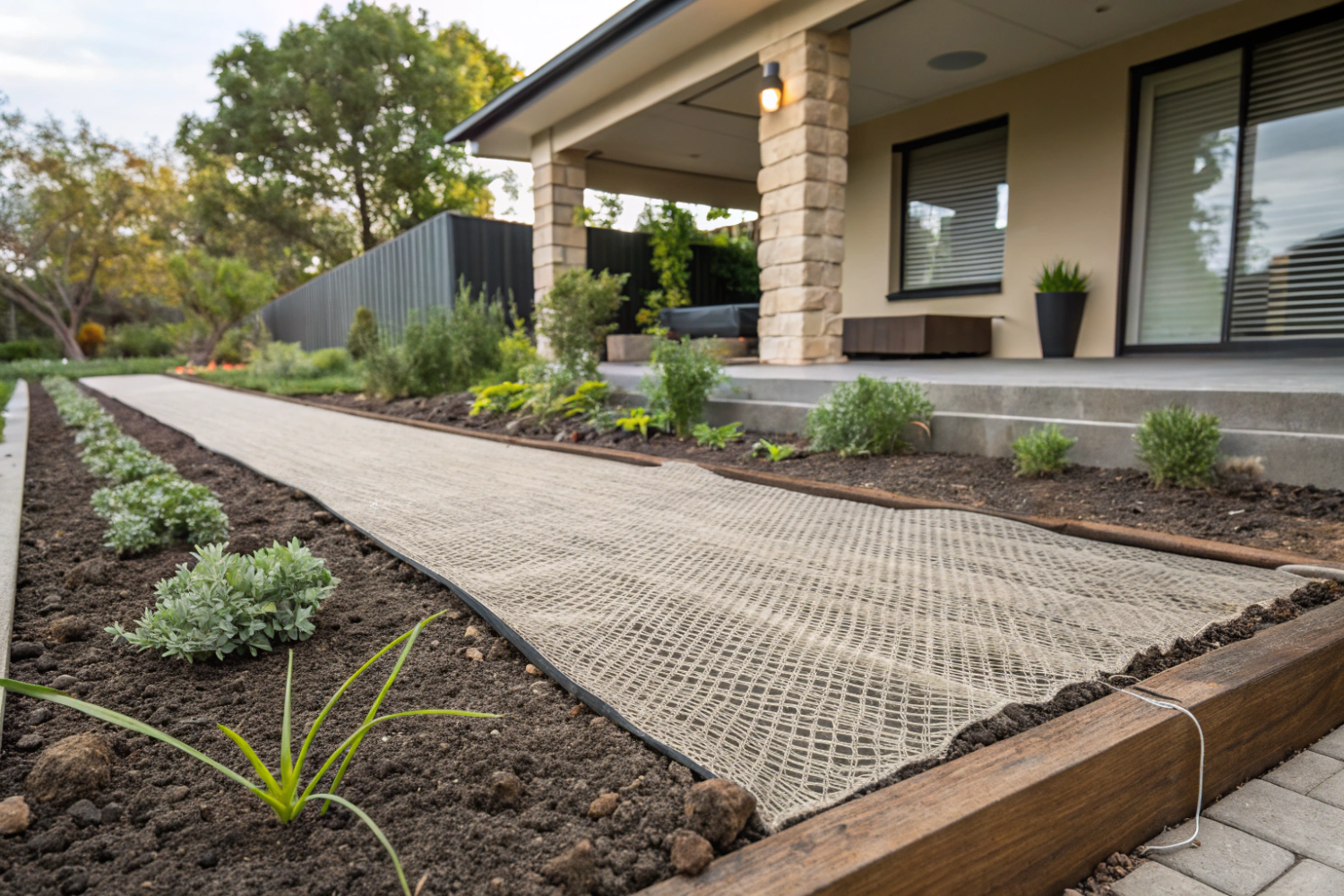
Depending on the product type specified, turf underlay performs several distinct functions. Drainage underlays manage the movement of water through and away from the synthetic surface, preventing pooling and the hygiene and structural problems that develop when water cannot escape efficiently. Shock-absorbing underlays deliver the cushioning layer required for soft fall compliance in play environments and the underfoot comfort expected across residential and commercial lawn applications. Weed suppression underlays create a barrier that blocks weed breakthrough into the synthetic surface without impeding drainage performance.
No single underlay product performs all of these functions equally well. Correct underlay specification means identifying which performance characteristics your installation requires and selecting the product built to deliver them across Newcastle’s varied installation environments.

Why Underlay Specification Determines Synthetic Grass Performance
The synthetic grass product installed on top receives most of the attention during the planning phase — pile height, fibre type, colour variation, and density. The underlay layer is rarely part of that conversation until something fails. Drainage failure, surface softness issues, weed breakthrough, and premature turf degradation are among the most common complaints following synthetic grass installation, and the majority trace directly back to incorrect or inadequate underlay specification.
An underlay product selected purely on cost rather than performance requirements will compromise the entire installation above it. A drainage foam specified for a flat residential backyard will not meet the critical fall height compliance requirements of a school playground. A geotextile weed mat alone will not deliver the underfoot cushioning a homeowner in Merewether or New Lambton expects from a residential lawn installation.
Correct specification from the outset protects the investment in the synthetic surface above it. For Newcastle homeowners, landscapers, and commercial operators, underlay selection is a technical decision with consequences that extend across the full lifespan of the installation — not a line item to be reduced.
Underlay Specification by Installation Environment
| Residential Backyards and Front Yards | Playground Soft Fall Zones | Commercial and Sports Surfaces | Rooftop and Elevated Installations |
|---|---|---|---|
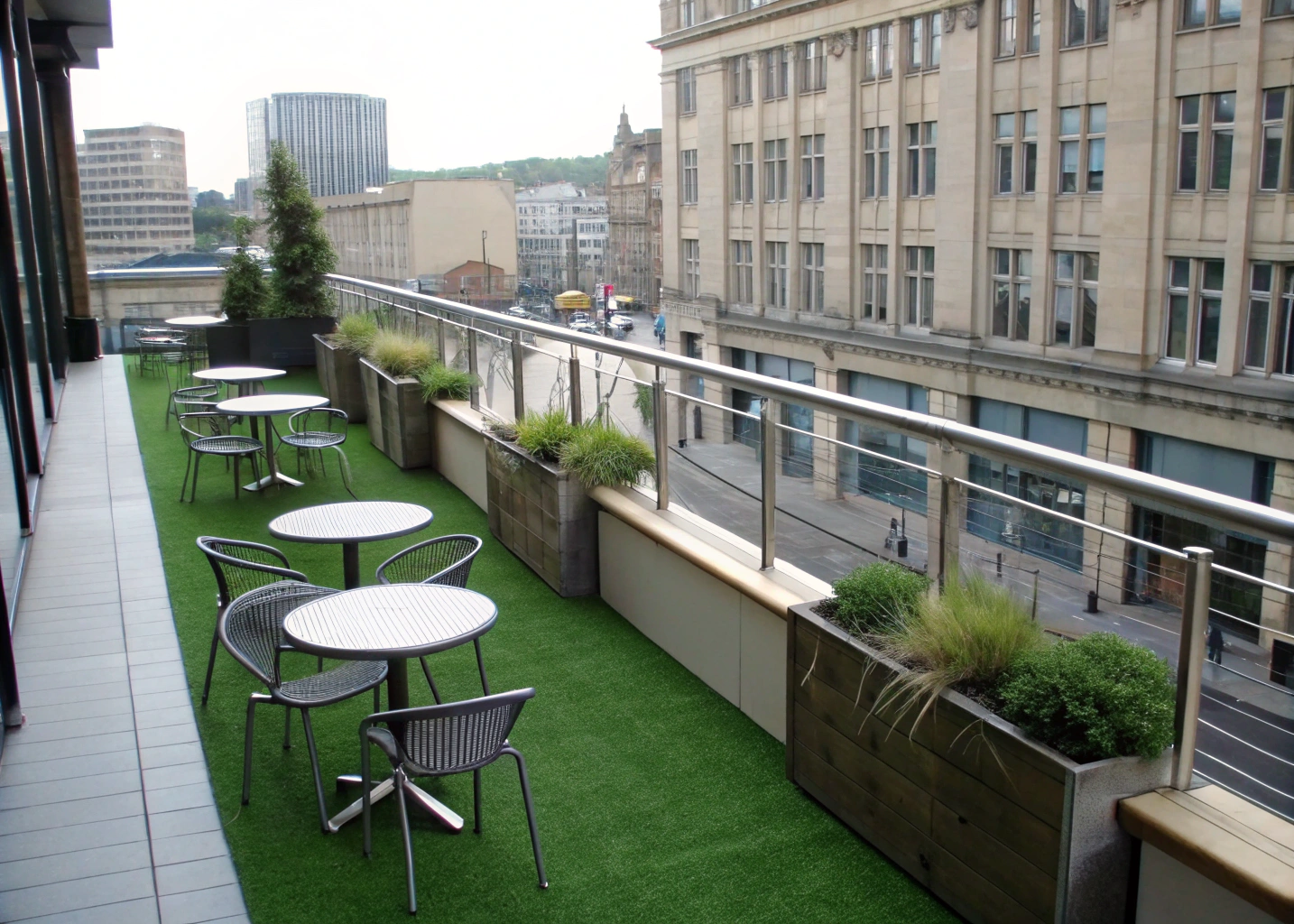
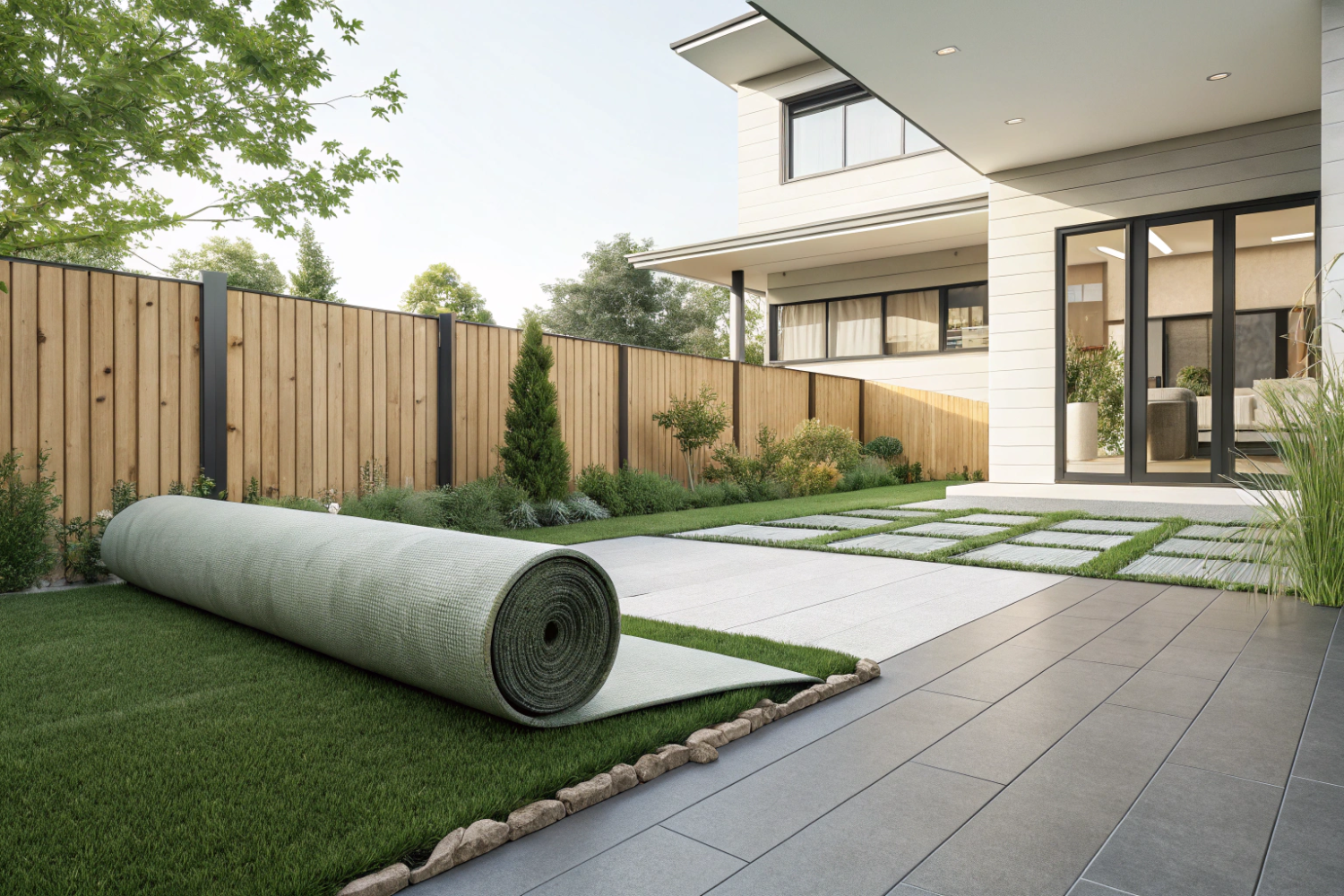
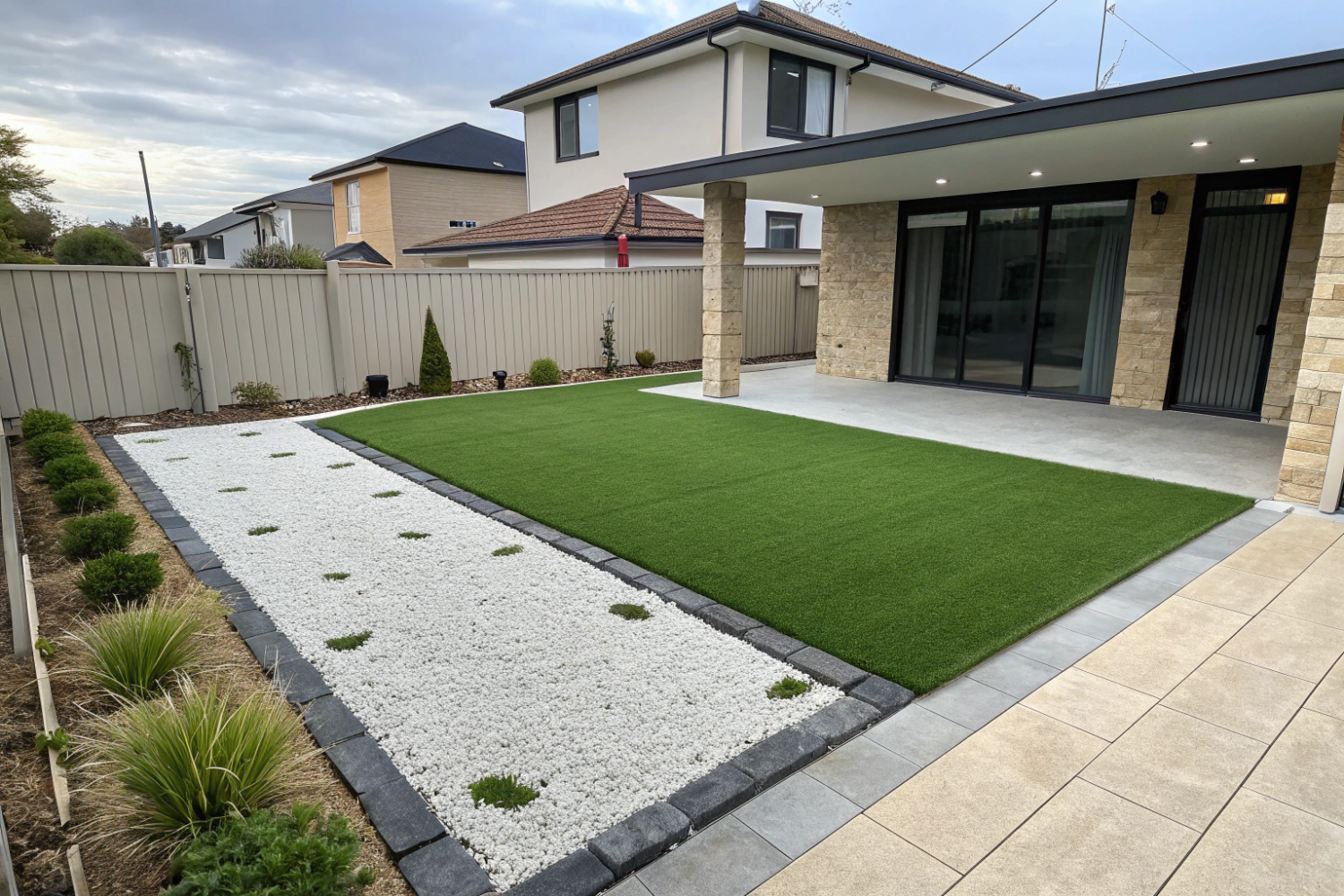
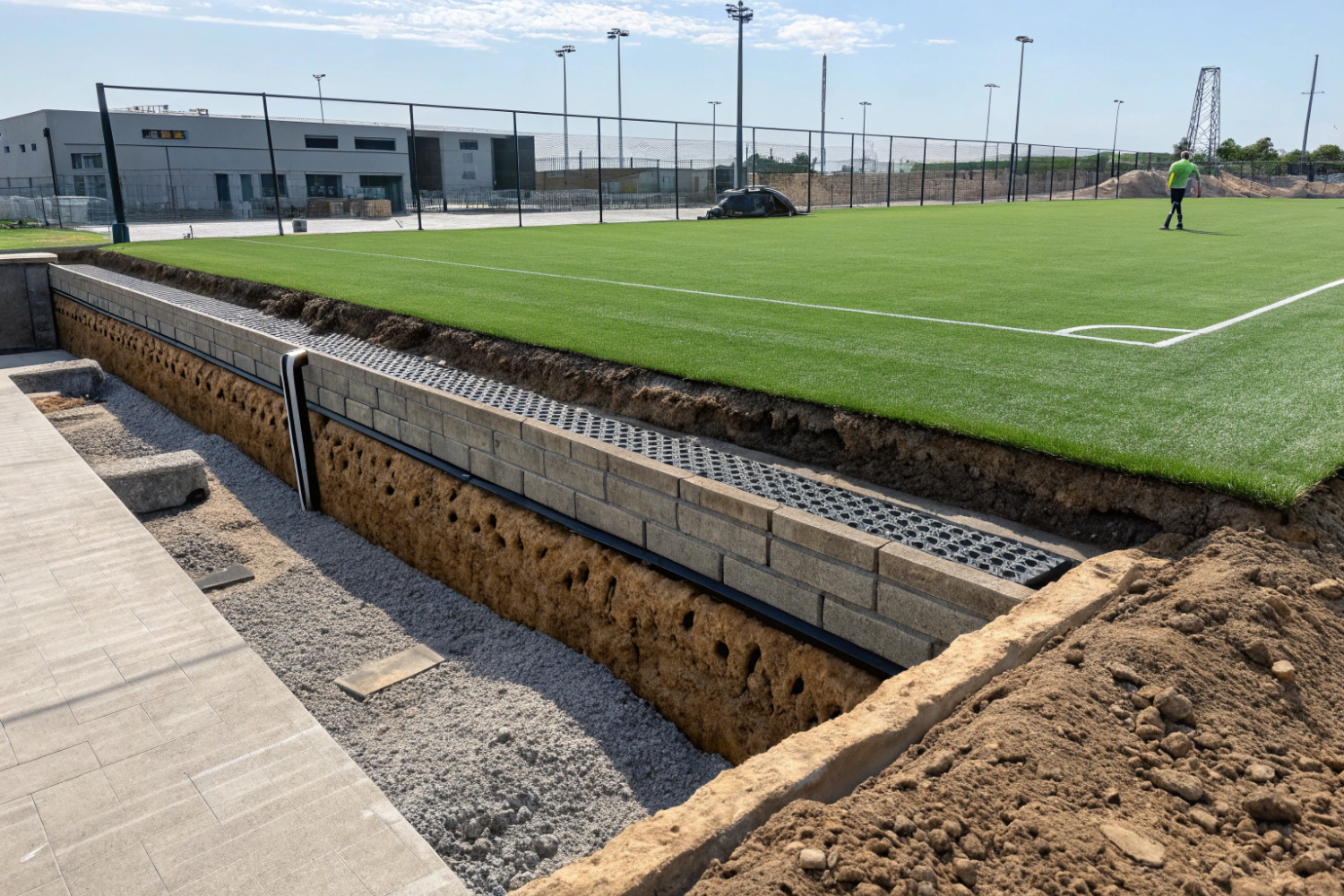
| Residential installations across Newcastle suburbs, including Adamstown, Kotara, and Wallsend, typically require a drainage foam underlay that delivers surface cushioning and efficient water movement through the turf backing. Front yard installations with high pedestrian traffic benefit from a denser foam product that maintains surface resilience under repeated footfall without compressing over time. | Playground applications require shock-absorbing rubber underlay specified to meet AS 4422 critical fall height compliance. The underlay thickness is determined by the fall height of the equipment above it. Newcastle schools, childcare facilities, and public play spaces require a certified product with supporting technical documentation confirming compliance at the specified thickness. | Sports surfaces and high-traffic commercial lawn installations require underlay products rated for sustained load and repeated impact. Rubber underlay or high-density composite products are specified where surface resilience, drainage performance, and durability under commercial foot traffic are the combined requirements across the installation’s full service life. | Rooftop and elevated synthetic grass installations introduce weight loading constraints that influence underlay selection. Lighter composite underlay products delivering both drainage performance and surface cushioning are specified where structural load per square metre must be managed. Waterproofing membrane compatibility is an additional specification consideration for all elevated surface installations. |
Signs Your Existing Synthetic Grass Needs an Infill Top-Up
Infill depletion develops gradually, which means many homeowners and property managers don’t recognise it until surface performance has already declined significantly. Knowing what to look for allows the top-up supply to be sourced and applied before the installation reaches the point where pile recovery becomes difficult.
The most common indicators that an existing synthetic grass installation needs an infill top-up include:
- Pile lying flat and failing to recover its upright position after foot traffic or furniture load is removed
- Surface drainage slowing noticeably after rainfall, with water pooling in areas that previously drained freely
- Increased surface hardness underfoot, particularly in high-traffic zones such as pathways, play areas, and pet runs
- Odour development in pet zones where antimicrobial infill has depleted and bacterial activity has increased within the pile base
- Visible pile matting in concentrated traffic areas that brushing alone cannot correct
- Edge lifting, where infill loss near the perimeter has reduced the turf’s stability and allowed movement at the joins
If any of these signs are present across a Newcastle installation, infill top-up supply is typically the most cost-effective intervention available before full replacement becomes necessary.
Matching Underlay Thickness and Density to Your Application
Underlay thickness and density are the two specification variables that most directly determine whether a product is suited to a given application or simply fills a gap between the base and the turf backing. Selecting the correct combination requires an understanding of the load requirements, drainage demands, and performance expectations specific to each installation environment.
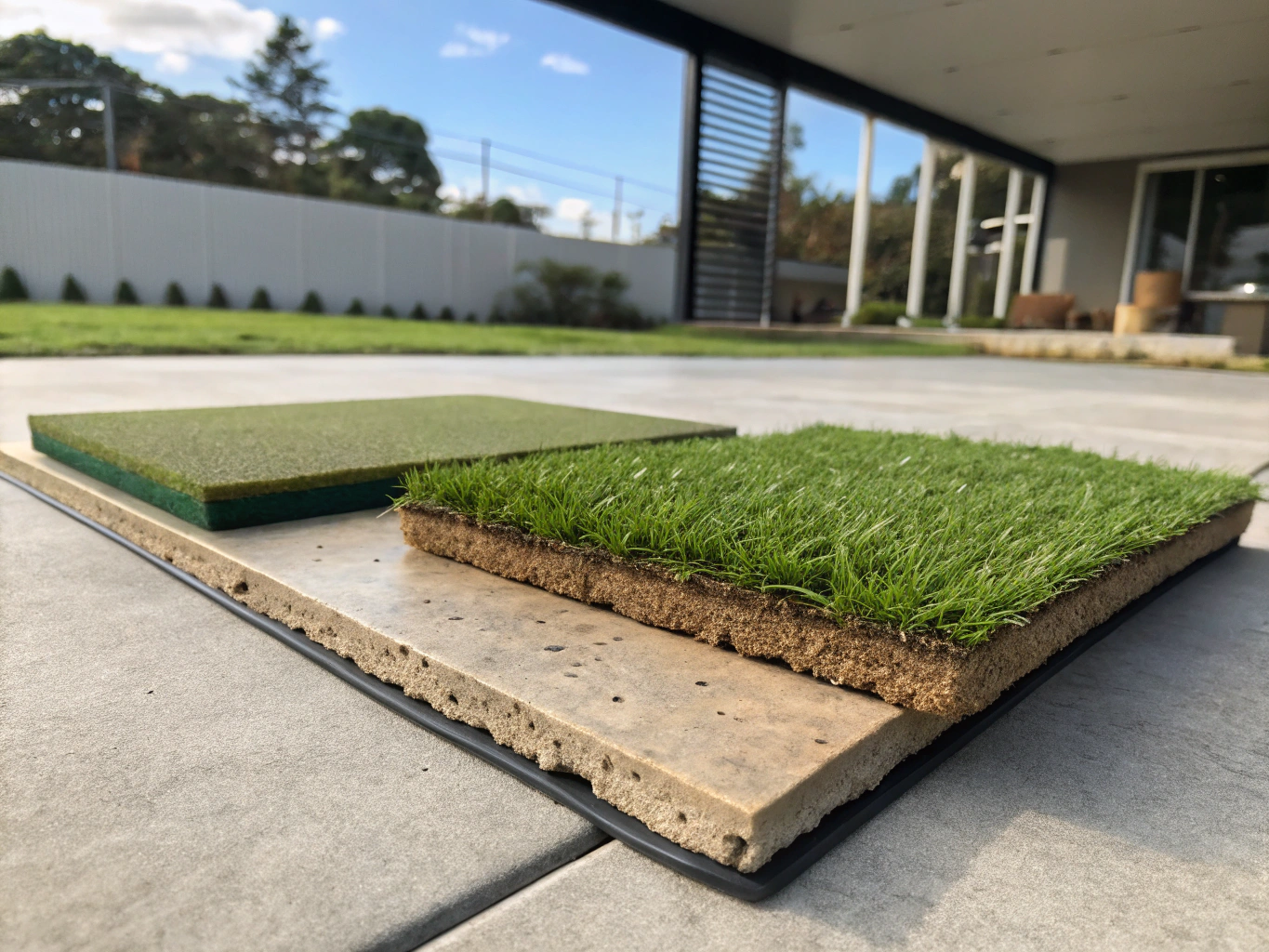
Thicker, higher-density rubber underlay is specified where impact absorption is the primary requirement — playground soft fall zones, sports surfaces, and high-traffic commercial applications where surface resilience under repeated load matters. Thinner drainage foam underlay suits residential lawn applications where cushioning and water movement through the surface are the performance priorities without the additional weight and cost of a heavier rubber product.
Rooftop and elevated installations introduce additional considerations around weight loading per square metre, where a lighter composite product may be specified to manage structural load without sacrificing drainage performance. Newcastle installations across sloped residential blocks in suburbs like Bar Beach, Merewether, and Hamilton may also require underlay products with specific lateral drainage characteristics to manage surface water movement on grade.
How to Calculate Underlay Quantities for Your Newcastle Project
Accurate underlay quantity calculation is a straightforward process when the installation area is correctly measured, but errors at this stage result in either material shortfall that disrupts the installation schedule or excess product that adds unnecessary cost to the project.
The standard calculation for rectangular and square installation areas is length multiplied by width to produce the total square metreage required. Irregular shaped areas — common in Newcastle residential backyards with curved garden beds, pool surrounds, or stepped yard layouts — are most accurately calculated by breaking the total area into smaller geometric sections and summing the individual results.
- Measure the full installation area in metres before ordering
- Add a 5–10% wastage allowance to account for cuts, joins, and irregular edges
- Account for roll width when calculating join placement across larger installation areas
- Confirm whether the underlay will run in the same or opposing direction to the synthetic grass above it
- For multi-zone installations — combining lawn, play area, and pool surround — calculate each zone separately using the correct product for each application
We provide quantity calculations for every Newcastle project we supply, confirming the correct amount of underlay product before the order is placed.
Drainage Foam Underlay for Residential and Commercial Lawns
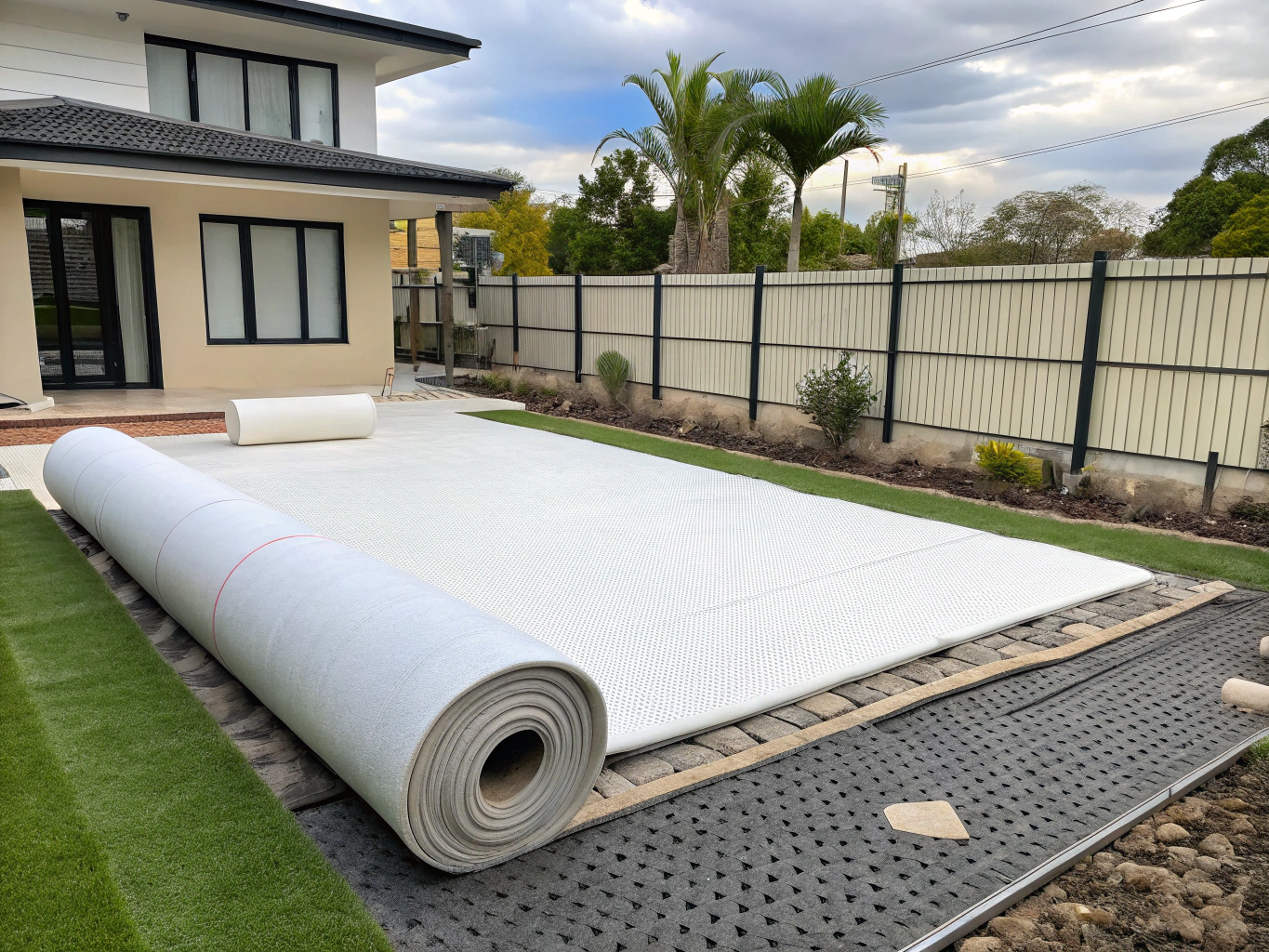
Drainage foam underlay is the most widely specified underlay product for residential and commercial synthetic grass installations across Newcastle. It delivers the two performance characteristics most relevant to standard lawn applications — efficient water movement through and away from the synthetic surface, and a cushioned underfoot feel that distinguishes a quality synthetic lawn installation from a surface laid directly onto a compacted base.
The product suits residential backyards and front yards across suburbs, including Adamstown, Hamilton, New Lambton, and Glendale, where homeowners expect a synthetic surface that drains quickly after rain, holds its surface profile under regular foot traffic, and maintains consistent underfoot comfort across the installation area.
Commercial lawn applications — including body corporate common areas, hospitality venues, and retail environments requiring low-maintenance green space — benefit from higher-density drainage foam products rated for sustained pedestrian traffic without surface compression over time.
We supply drainage foam underlay in the thicknesses and densities suited to residential and commercial applications across Newcastle and the Hunter Region, with quantity calculations provided for each project.
Common Underlay Mistakes That Lead to Synthetic Grass Failure
The majority of synthetic grass performance problems that develop after installation are not product failures — they are specification and installation failures that originate at the underlay layer. Identifying the most frequent mistakes before specifying and installing the underlay is the most effective way to avoid remediation costs later.
- Selecting an underlay based on price rather than performance requirements for the specific application
- Using geotextile weed mat alone without a drainage or shock-absorbing layer in residential and commercial lawn applications
- Specifying residential drainage foam in playground soft fall zones where AS 4422 compliance requires certified rubber underlay at a tested thickness
- Failing to account for lateral drainage requirements on sloped installations across Newcastle suburbs with significant grade changes
- Ignoring weight loading constraints on rooftop and elevated surfaces where standard underlay products exceed structural limits
- Ordering incorrect quantities that result in joins and overlaps compromising drainage continuity across the installation
Each of these mistakes is avoidable with a correct underlay specification from the outset. We work with Newcastle homeowners, landscapers, and commercial operators to confirm the right product, thickness, and configuration for each installation environment before supply — removing the guesswork that leads to costly remediation.
Consistent Product Availability for Multi-Project Trade Accounts
Newcastle landscapers and synthetic grass contractors running multiple installations simultaneously require an underlay supplier that can meet consistent product demand across varying project sizes without lead time uncertainty disrupting installation schedules.
Trade accounts with our Newcastle underlay supply operation benefit from reliable product availability across our full range of drainage foam, rubber, geotextile, and composite underlay products. Whether the project list includes a residential backyard in Fletcher, a school playground soft fall zone in Wallsend, and a commercial lawn installation in the Newcastle CBD running concurrently, we maintain the stock depth to supply each project on schedule without substitution or delay.
Quantity calculations are provided for each project based on the installation area and specified product, reducing material waste and ensuring accurate ordering across the account. Trade customers receive consistent product specifications across every order — the same product, the same thickness, the same density, and the same drainage performance data — removing the variability that creates compliance and quality control problems across a multi-project installation programme.
Frequently Asked Questions About Turf Underlay Supply in Newcastle
Drainage foam underlay is specified for residential and commercial lawn applications where surface cushioning and water movement are the primary requirements. Rubber underlay is specified for playground soft fall zones and sports surfaces where certified impact absorption and AS 4422 compliance are required.
Underlay is strongly recommended for all synthetic grass installations. The product type varies by application, but omitting underlay entirely compromises drainage performance, underfoot comfort, and the long-term stability of the synthetic surface above the compacted base.
Playground soft fall zones require shock-absorbing rubber underlay certified to meet AS 4422 critical fall height requirements. The specified thickness is determined by the fall height of the equipment installed above the surface. Technical documentation confirming compliance is available for all certified products we supply.
A geotextile weed mat alone is not sufficient for most synthetic grass installations. It suppresses weed breakthrough effectively but does not deliver the drainage performance or surface cushioning that residential and commercial lawn applications require. It is most effective when combined with a drainage or shock-absorbing underlay layer.
Underlay quantity is calculated by measuring the total installation area in square metres and adding a 5–10% wastage allowance for cuts and irregular edges. We provide quantity calculations for every project we supply to confirm the correct amount before the order is placed.
Pet-friendly installations benefit from drainage foam underlay with strong water movement characteristics, allowing urine to pass efficiently through the synthetic surface and underlay layer without pooling or odour retention. Higher-density products maintain surface profile under the repeated traffic typical of active dog use.
Get Turf Underlay Pricing and Specifications for Your Newcastle Project
Turf underlay supply across Newcastle and the Hunter Region is available for residential homeowners, landscapers, and commercial operators sourcing product for new synthetic grass installations or remediation of existing surfaces where underlay replacement is required.
We supply drainage foam underlay, shock-absorbing rubber underlay, geotextile weed mat, and composite underlay products suited to the full range of Newcastle installation environments — from residential backyards in Jesmond and Charlestown through to playground soft fall zones, commercial sports surfaces, and rooftop installations requiring weight-rated products.
Get in touch to discuss your project requirements, confirm the correct underlay specification for your application, and receive pricing based on accurate quantity calculations for your installation area. We provide technical product documentation for commercial and compliance-driven projects where specification sheets are required as part of the installation record.
Contact us today for turf underlay pricing and specifications tailored to your Newcastle project.
