
Is Artificial Grass Good for Dog Runs?
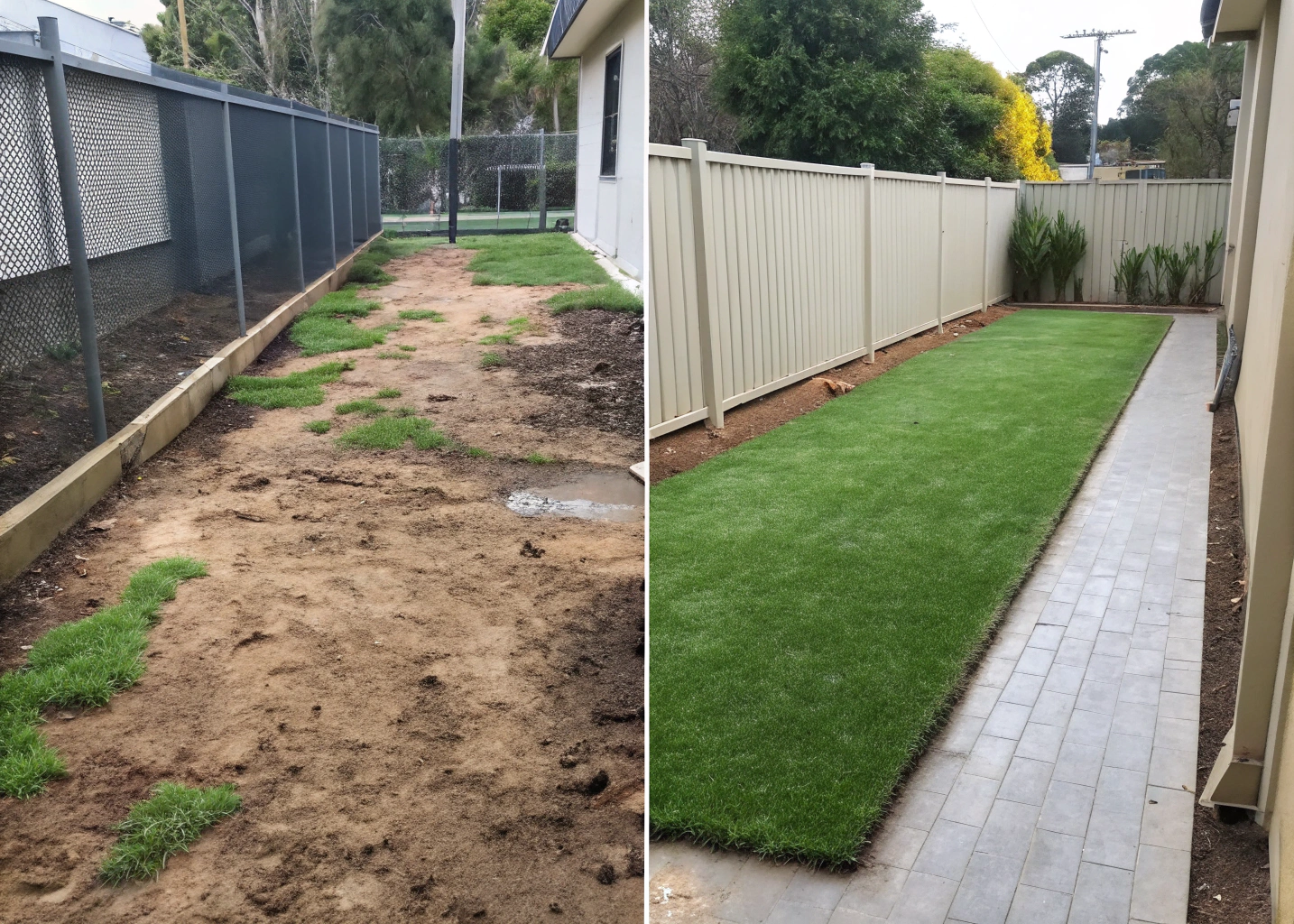
Yes — but only when the right product is selected and the base is installed correctly. This is an installation quality question as much as it is a product question.
- Perforated drainage backing eliminates urine pooling — the primary hygiene failure point in natural grass dog runs
- Purpose-selected pile height and blade structure resists matting under constant pacing and traffic
- Non-toxic, lead-free materials — no pesticides or fertilisers required
- Flea and tick habitat is eliminated compared to natural grass
- The surface can be hosed down and sanitised without breaking down
- Heat is a real consideration in Newcastle summers — shade structures and cool-down hosing address this directly
Professionally installed dog run turf in Newcastle is purpose-built for the conditions: warm climate, confined enclosures, and year-round pet use.

Why Natural Grass Fails in a Dedicated Dog Run
A dog run is not a backyard. It’s a confined space that receives concentrated, repeated traffic from the same animal, in the same patterns, every single day. Your dog paces the fence line, digs at the edges, uses the same corners as a toilet, and rests in the same spots. Natural grass has no chance of recovering between that kind of use.
The drainage in a typical residential dog run is rarely designed for the volume of liquid waste a dog produces daily. Urine saturates the soil, pools on the surface, and creates the odour and hygiene problems that make the space unpleasant for your dog and unbearable for you. Add Newcastle’s warm summers into the mix and bacteria breed faster, the smell intensifies, and the ground stays wet longer than it should.
Fake grass dog run installations solve a purpose problem, not just an appearance problem. The surface your dog lives on needs to be built for what a dog actually does — and natural grass, no matter how well you maintain it, was never that surface.
Drainage — The Factor That Determines Hygiene
If there is one element of a dog run turf installation that determines whether the space stays clean long-term, it is the drainage. The turf surface matters, but a well-chosen product installed over a poorly prepared base will still pool, still smell, and still let you down.
How a Correctly Prepared Base Eliminates Urine Pooling: A correctly prepared base starts with excavation, followed by a compacted sub-base, a layer of crushed rock or drainage cell, and then the turf on top. Liquid passes through the backing, moves through the drainage layer, and disperses into the ground below rather than sitting under the surface.
What Happens When Drainage Is Done Wrong: When the base is not prepared correctly, liquid pools under the turf and stays there. Bacteria build up, the surface stays damp, and the smell becomes worse than it was with natural grass.
Safety and Comfort for Your Dog
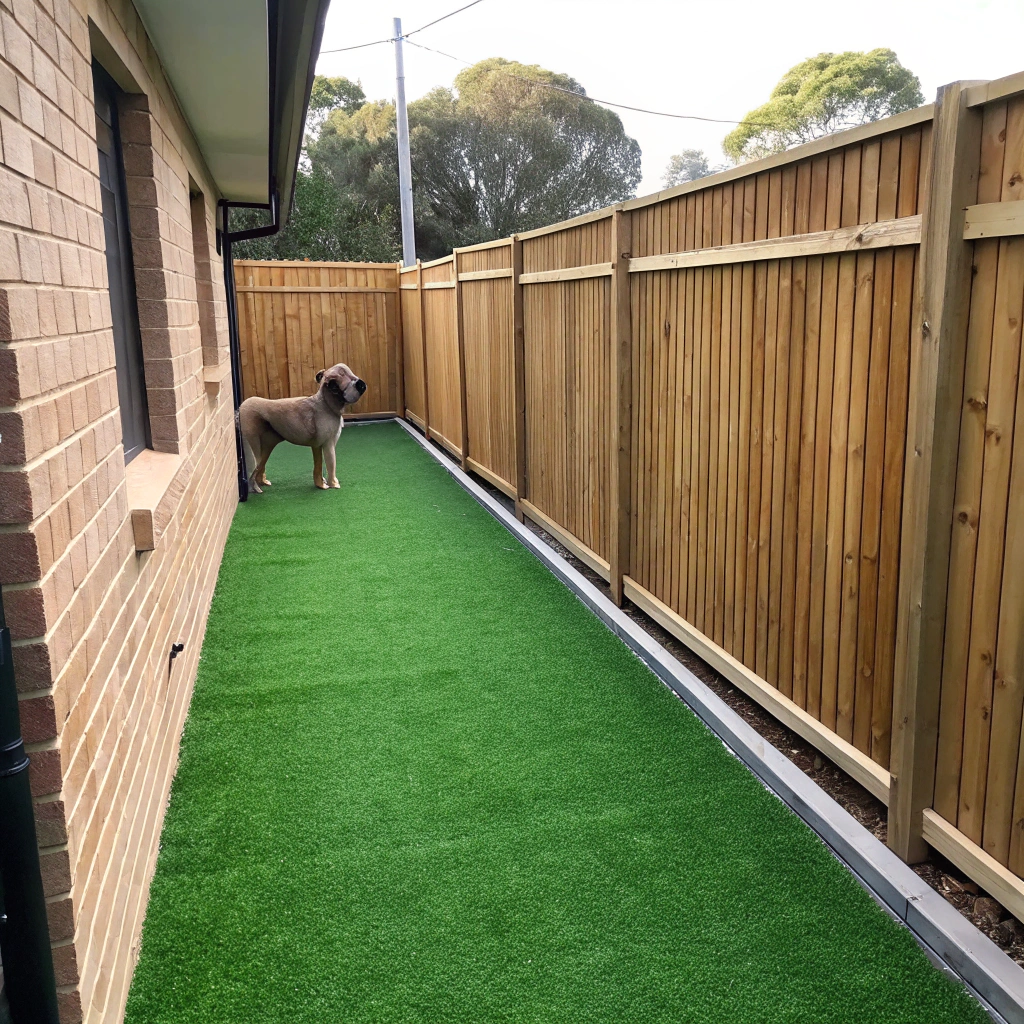
The turf we install in dog runs is non-toxic and lead-free. There are no pesticides or fertilisers needed to maintain the surface, which means your dog is not coming into contact with the chemicals that come with keeping natural grass alive.
Artificial grass also removes the habitat that fleas and ticks thrive in. Natural grass and soil give these parasites somewhere to live and breed. A clean turf surface with a correctly prepared base underneath takes that environment away.
Surface comfort matters too. Dogs don’t just run on their turf — they rest on it, roll on it, and spend long periods of time in direct contact with it. The products we select for dog run installations are soft enough for your dog to lie on comfortably while being durable enough to handle everything else they put it through.
Dog Run Design and Sizing for Newcastle Properties
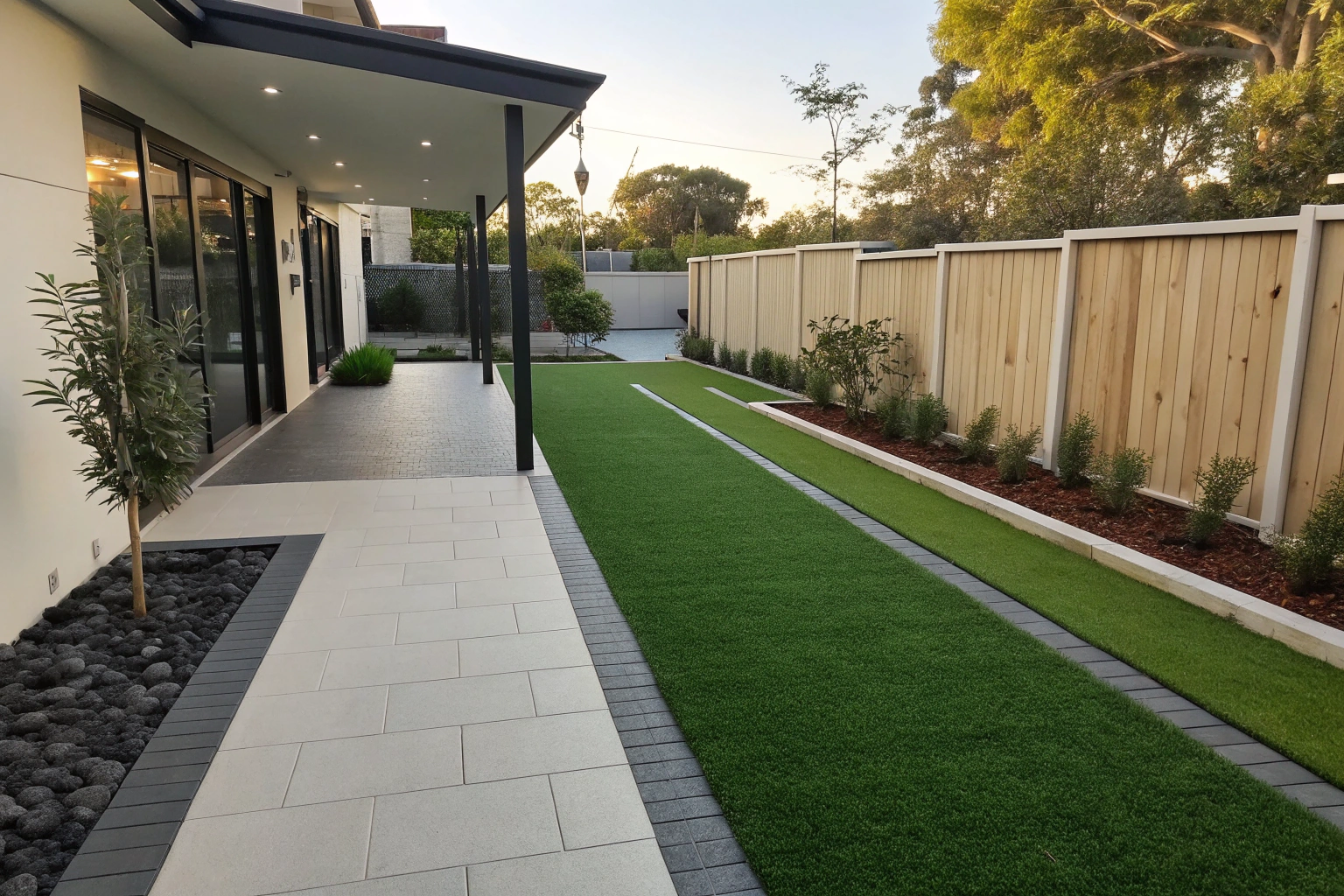
Every dog run we install starts with a site measure. The right product and base preparation depends on the size of the space, how it drains naturally, and how your dog uses it. Newcastle residential blocks vary a lot, and the approach we take reflects that.
Side Yard Enclosures: Side yards are the most common dog run configuration we work with across Newcastle suburbs. They’re typically narrow, long, and fully enclosed — which means drainage needs to be planned carefully given the confined layout. We assess the natural fall of the space and prepare the base to move liquid away from the surface efficiently.
Rear Yard and Larger Exercise Areas: Larger rear enclosures give dogs more room to run and play, but they come with their own considerations around base preparation and product selection. Bigger spaces mean more surface area to drain effectively, and we size the drainage layer accordingly to handle the load across the full area.
Cleaning and Maintaining Your Dog Run Turf Surface
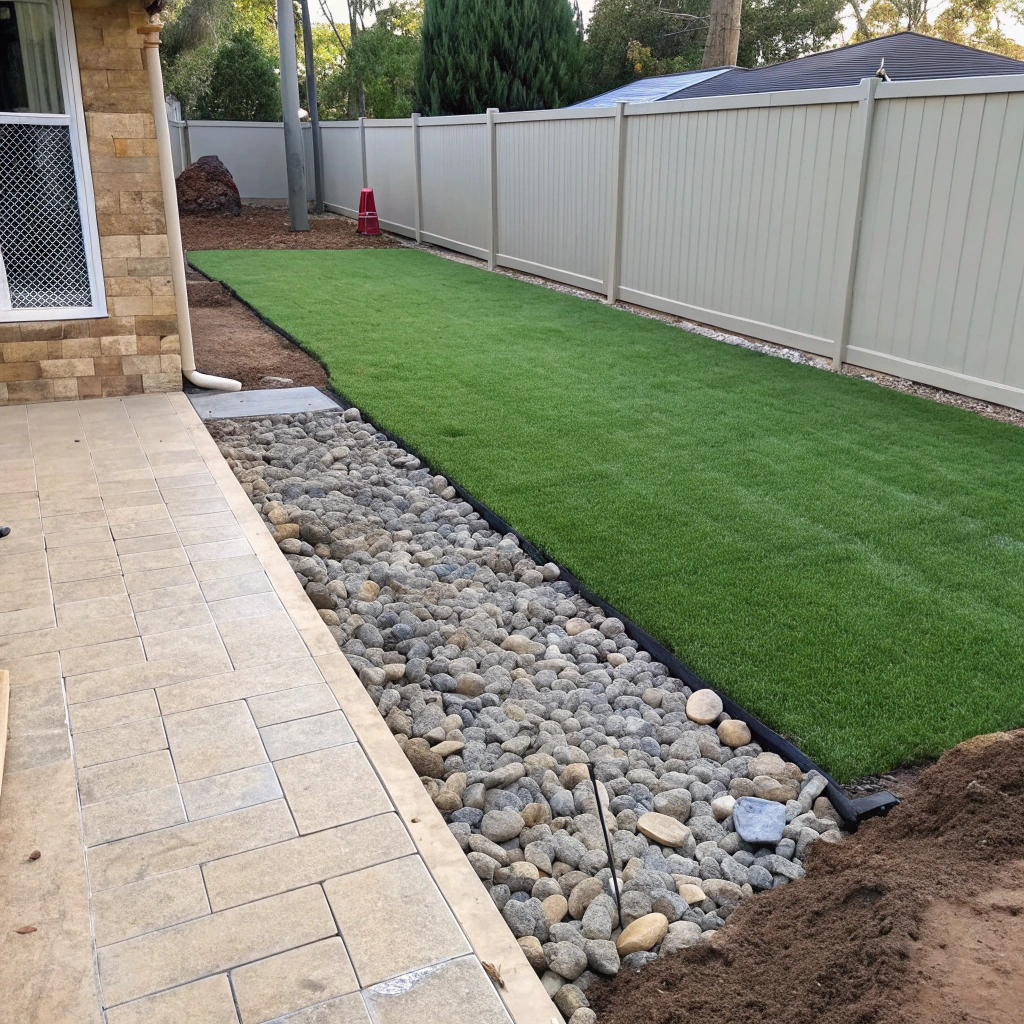
Maintaining a dog run turf surface is straightforward. Solid waste is removed as you would normally, and a regular hose down keeps the surface clean and the drainage flowing. For a deeper clean, an enzyme-based cleaner breaks down the organic compounds in urine without damaging the turf or the infill layer beneath.
You do not need specialist equipment or professional cleaning visits to keep the space hygienic. A hose, a basic enzyme cleaner, and a quick weekly check is enough for most dog runs. The surface does not absorb odour the way soil and natural grass do, which means routine maintenance stays light rather than becoming a project in itself.
The goal of a well-installed dog run turf surface is to make the space easy to live with — for your dog and for you.
What Newcastle Pet Owners Should Know Before Getting a Quote
What to Ask Your Installer About Product Selection: Not every installer uses pet-grade turf for dog run jobs. Before you commit, ask specifically what product they are recommending for your dog run, what the drainage backing is rated for, and what infill they plan to use. A general backyard turf product laid in a confined dog run will not perform the same way. The difference shows up within weeks of installation.
Understanding the Full Installation Cost: The cost of a dog run turf installation covers more than the turf itself. Base preparation — excavation, compacted sub-base, and drainage layer — is a significant part of the job and the part that most affects long-term performance. A quote that comes in well below others is worth questioning. Ask what the base preparation includes, because that is where corners get cut and where problems start.
Frequently Asked Questions
Yes. The turf we install in dog runs is non-toxic and lead-free. No pesticides or fertilisers are needed to maintain it, so your dog is not coming into contact with the chemicals typically used to keep natural grass alive.
When the base is prepared correctly, urine passes straight through the drainage backing and disperses into the ground below. It does not pool on the surface or saturate the soil underneath. The odour-resistant infill we use also neutralises ammonia compounds rather than just masking the smell.
It can warm up in direct sun on hot days, which is true of most surfaces including concrete and paving. We recommend a shade structure over the run where possible, and a quick hose down before your dog uses the space on very hot days brings the surface temperature down fast.
A properly installed dog run turf surface will typically last ten to fifteen years. The base preparation is the biggest factor in longevity — a well-drained, correctly laid base protects the turf from underneath and keeps the surface performing the way it should.
A correctly installed surface with the right infill and drainage does not hold odour the way natural grass and soil do. Routine hosing and occasional enzyme cleaner use keeps the space fresh. The smell problems people associate with artificial grass in dog runs almost always come down to poor drainage or the wrong infill product being used.
Dogs do attempt to dig at turf, particularly at edges and corners. We secure the edges of every installation so there is nothing loose for your dog to get hold of. The turf surface itself is tough enough to resist casual digging, though persistent diggers at the perimeter are worth discussing at the measure so we can advise on the right edge treatment for your space.
Remove solid waste as normal, then hose the surface down regularly to keep it clean and the drainage flowing. For a deeper clean, an enzyme-based cleaner breaks down organic waste without damaging the turf or infill. Most dog run surfaces stay hygienic with a weekly hose and a quick inspection.
Get a Free Dog Run Quote From Artificial Grass Newcastle Experts
We offer a free measure and quote on all dog run installations across Newcastle. We’ll assess your space, recommend the right product for your dog and your property, and give you a clear price with no obligation.
Artificial Grass Newcastle Experts 📞 02 4072 2364
We service pet owners across Adamstown, Merewether, Hamilton, Fletcher, Charlestown, and surrounding Newcastle suburbs.
How it works:
- We measure your space
- We recommend the right product and base preparation
- We install and you’re done
